
Gemini Thinking
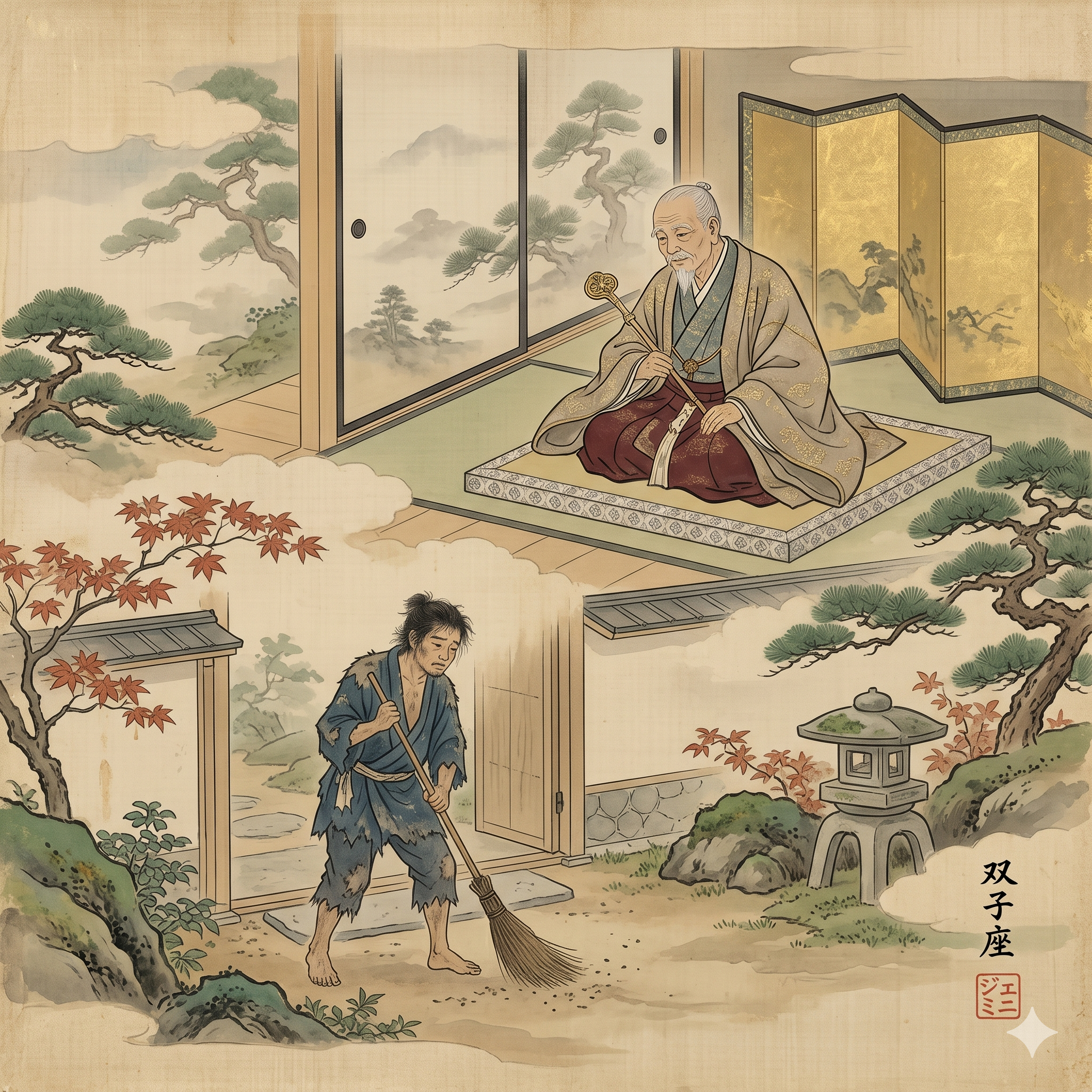
To interpret this verse from the Lotus Sūtra regarding the parable of the Wayward Son, my conceptual reasoning focused on visualizing the profound internal conflict of the wealthy father as he observes his unrecognizing and attachment-bound son, while strictly adhering to the specified iconography and constraints. The image employs classical Japanese aesthetic principles with ink and mineral pigments on silk, utilizing a 1:1 square composition. It features a split scene: the upper register shows the dignified father figure, who represents the wisdom of the disciples and perhaps the Buddha's perspective, observing from within a rich Japanese compound. The lower register captures the disheveled, wayward son performing menial labor, unaware of his true identity. I purposefully avoided representing Amida Nyorai or Dainichi Nyorai, focusing on the human drama as requested. The only textual element, as specified for the artist signature, is placed discreetly on the bottom right. The large Kanji characters '双子座' (Futago-za) translate to 'Gemini', and the Katakana within the red seal, 'ジェミニ' (Jemini), also translate to 'Gemini'.
The rich man thought:
“He is ignorant, narrow-minded, and mean.
If I tell him that I am his father,
He will not believe me.”
These verses are part of the story of the Wayward Son told by Subhūti, Mahā-Kātyāyana, Mahā-Kāśyapa, and Mahā-Maudgalyāyana in Chapter Four of the Lotus Sūtra. The son in the story has forgotten who his father is. The father cannot just bring him into his inheritance while the son is still attached to his lowly life. The story explains the disciples’ understanding of why the Buddha cannot give his highest teaching without expedients.
The Daily Dharma is produced by the Lexington Nichiren Buddhist Community. To subscribe to the daily emails, visit zenzaizenzai.com