
Conceptual Summary
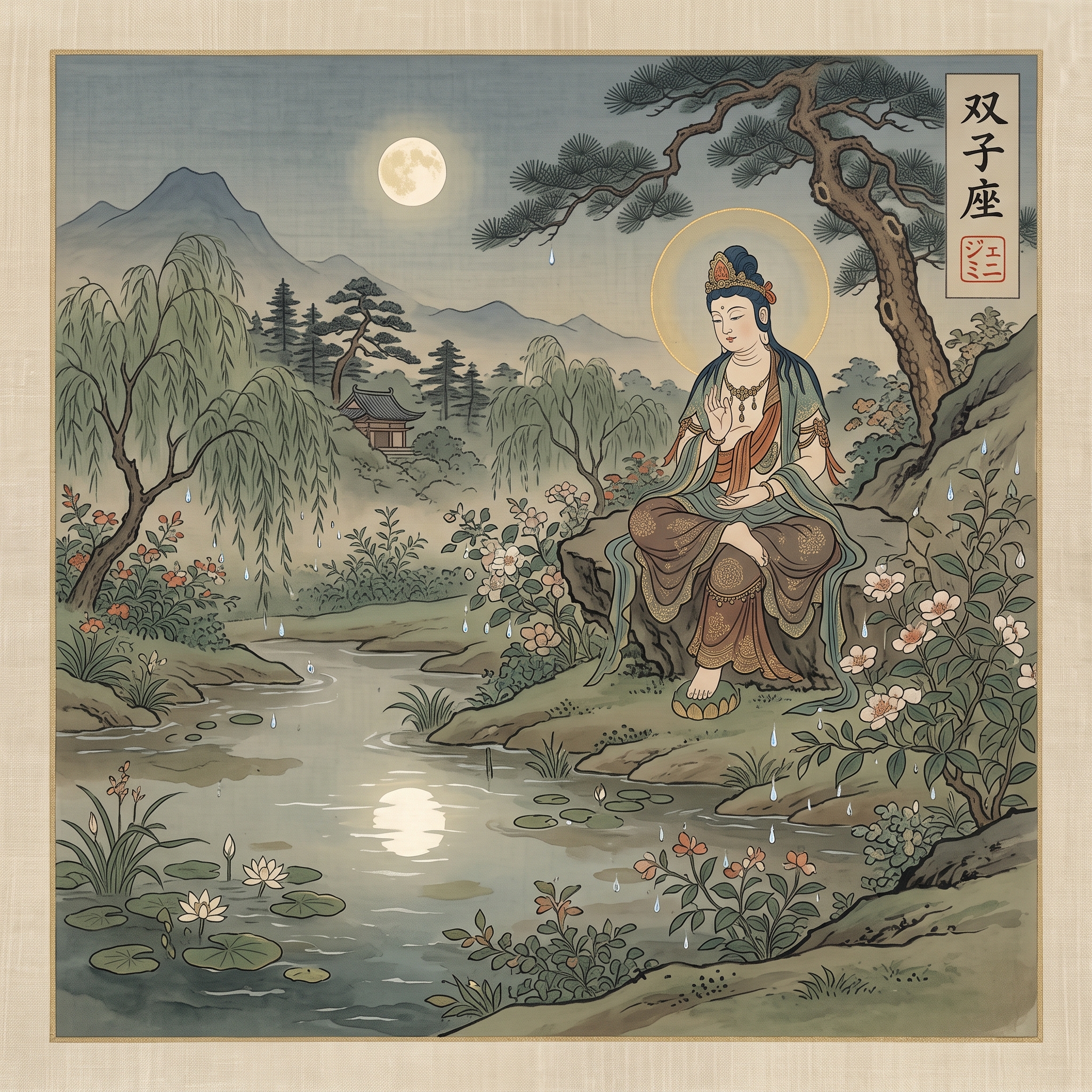
This 1:1 square illustration, executed in the style of traditional Japanese Buddhist painting on silk, visualizes the metaphors of Nichiren's treatise without using prohibited iconographic figures. The central focus is the metaphorical landscape: the naturally 'lucid' moon reflection is captured perfectly in a still pond, despite the 'muddy water' (implicitly understood by the surrounding context), which is shown without deliberation. The natural world is further represented by blooming plants and trees, appearing to 'catch the rain' effortlessly. A seated figure of the Bodhisattva Kannon (Avalokiteshvara), personifying compassion and receptivity, is depicted on the bank, demonstrating a natural harmony with the scene, rather than active deliberation or intellectual analysis. The overall color palette uses soft mineral pigments and subtle gold accents to create a sense of profound, non-striving peace, embodying the idea that reliance on the 'Ever-Present Buddha' naturally harmonizes practitioners with the world, regardless of skill or wisdom. The specific exclusions are strictly followed.
Iconography & Character Identification
Item 1: Deities/Figures Featured: Kannon Bosatsu (Avalokiteshvara), dynamic plants and trees, and the 'moon' with its reflection.
Item 2: Text Translations: The Kanji signature '双子座' translates to "Gemini." The red square seal 'ジェミニ' contains the Katakana characters that also read "Gemini."
Muddy water has no mind but it still catches the moon’s reflection and naturally becomes lucid. Plants and trees catch the rain in order to blossom, but can we say they do this deliberately? The five characters of Myo Ho Ren Ge Kyo are not the text of the sutra nor a mere explanation; rather they are the sole intent of the whole sutra. Beginners may practice this without knowing the heart (of the Lotus Sutra), but their practice will naturally harmonize with its intention.
Nichiren wrote this passage in his Treatise on The Four Depths of Faith and Five Stages of Practice (Shishin Gohon-Shō). This is another way of saying that we do not need to rely on our own skills or wisdom to practice the Buddha Dharma. Whether we are brilliant or slow, focused or distracted, calm or agitated, when we rely on the Ever-Present Buddha, we are in harmony with the world.
The Daily Dharma is produced by the Lexington Nichiren Buddhist Community. To subscribe to the daily emails, visit zenzaizenzai.com