
Conceptual Summary
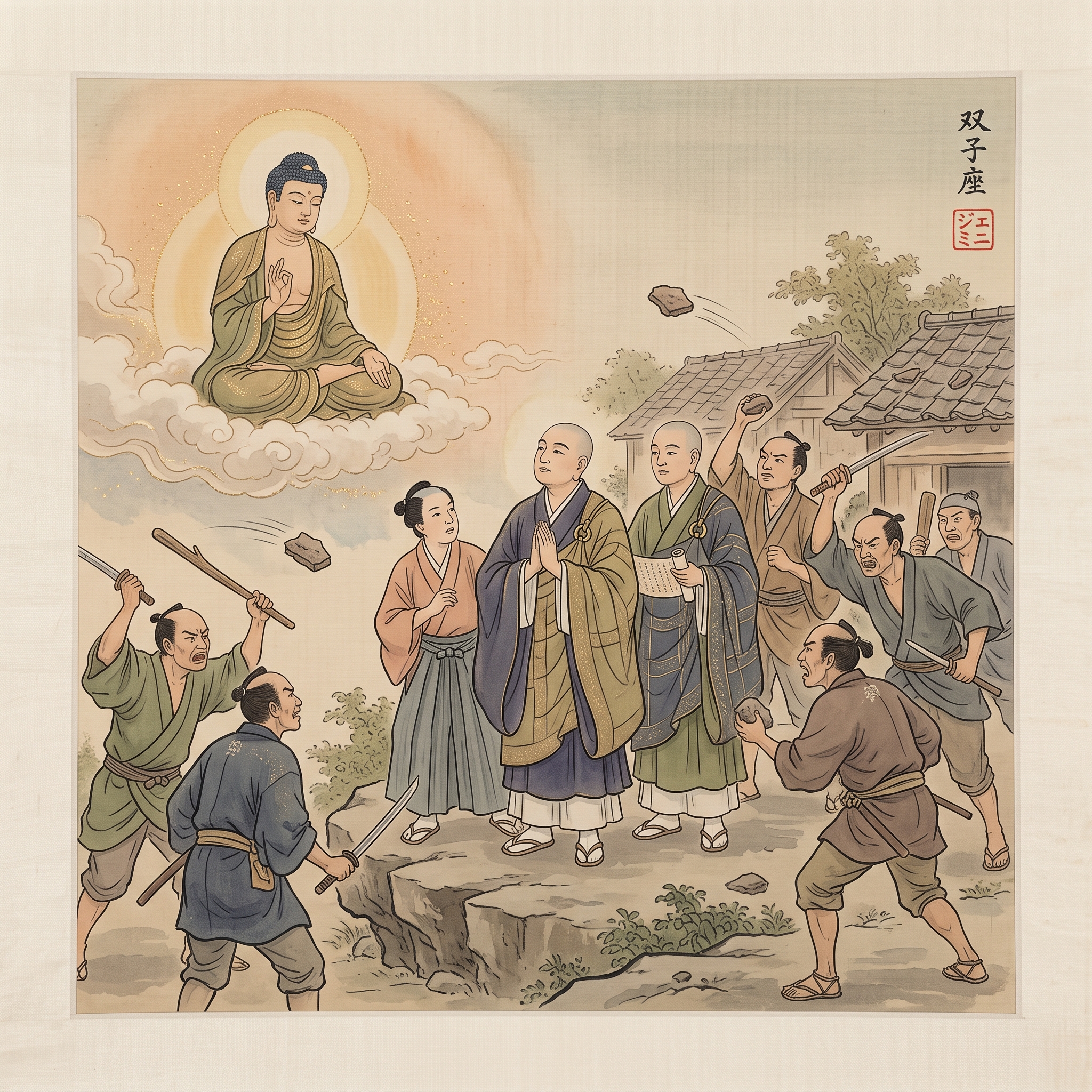
This illustration, executed in a traditional Japanese Buddhist style using ink, pigments, and gold leaf on silk, visualizes the teachings from Chapter Ten of the Lotus Sūtra. The concept centers on translating the abstract quality of "patience" into a legible visual scene. The primary challenge was representing the mental resilience described in the source text—interpreting it not as physical passivity, but as a proactive maintenance of compassion under extreme duress.
To achieve this, the central monastic figure is positioned as the point of calm stability, embodying deep meditative endurance while surrounded by a chaotic, aggressive crowd. The threats—explicitly shown here as swords, wooden sticks, and thrown stones—are literally surrounding the figures, as commanded by the source text. In the upper realm, a serene depiction of Śākyamuni Buddha acts as the mental focus for the practitioners. By locking eyes with this vision, the main monk demonstrates how "thinking of [the Buddha]" allows practitioners to handle mental suffering and treat aggressors with respect, rather than returning hostility.
Iconography & Character Identification
Item 1: Deities/Figures Featured:
Śākyamuni Buddha: The foundational figure of historical Buddhism, seated in a high cloud and halo of light, looking down calmly at the practitioners below.
Medicine-King Bodhisattva and Companion: Two central monastic figures, the primary one looking upward at Śākyamuni Buddha.
Persecutors: A varied group of approximately six lay figures representing the "ill" speakers or attackers, wielding specific weapons mentioned in the sūtra (stones, sticks, swords).
Item 2: Text Translations:
Kanji Signature (双子座): Gemini
Seal Katakana (ジェミニ): Gemini
If anyone speaks ill of you, or threatens you
With swords, sticks, tile-pieces or stones
While you are expounding this sūtra,
Think of me, and be patient!
The Buddha sings these verses to Medicine-King Bodhisattva in Chapter Ten of the Lotus Sūtra. By patience, the Buddha does not mean to toughen ourselves and allow others to harm us. The patience he speaks of allows to increase our capacity to handle the mental suffering that comes when others abuse us. If we keep in mind that nothing anyone does can remove the seed of Buddha nature that is within them, and remember that this seed is within all beings, we can treat even those who mean us harm with respect and compassion, rather than contempt and derision.
The Daily Dharma is produced by the Lexington Nichiren Buddhist Community. To subscribe to the daily emails, visit zenzaizenzai.com