
Buddhism for Today, p292[Chapter 18] states that even a person who is so unenlightened that when he comes in contact with the teaching he is not deeply moved by it will obtain very great merits. This teaches us how important it is to have the opportunity to encounter the teaching. We all surely have the buddha-nature, but we cannot attain salvation unless we awaken to the existence of our buddha-nature through such an opportunity. To come in contact with the teaching is a prior condition for salvation, and the opportunity to encounter it must be said to be very sacred indeed. Accordingly, our giving such an opportunity to others is also a very sacred deed.
Category Archives: LS32
Ecumenical Buddhism
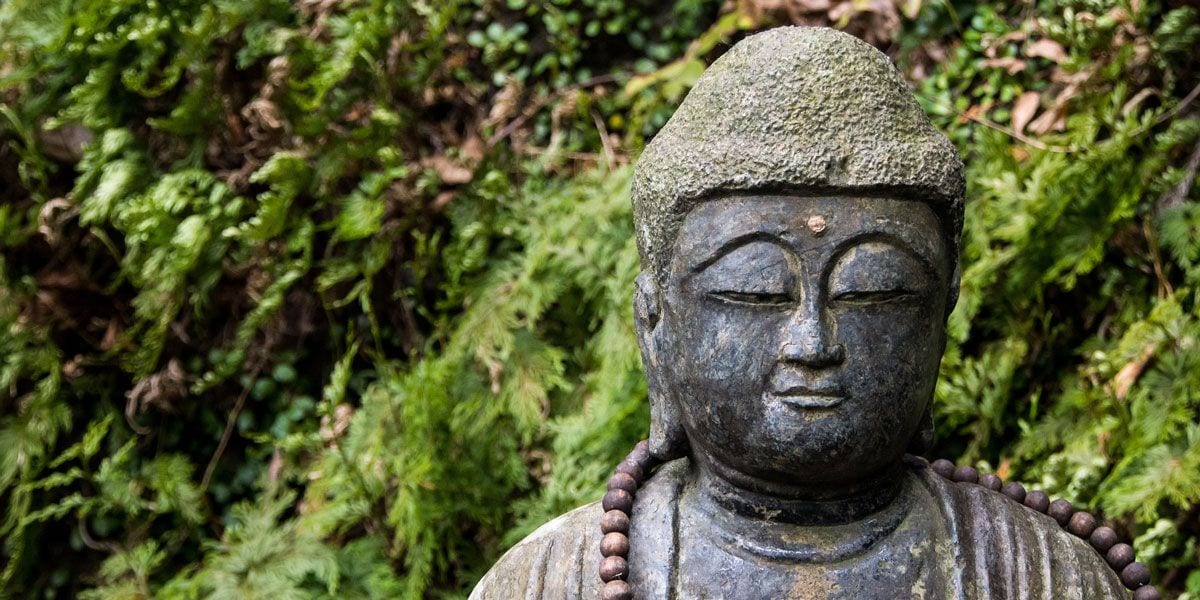
While I struggle with Gene Reeves and Risshō Kōsei Kai’s doctrine of Interfaith Truth, I have no real problem with the idea that the ocean of the Lotus Sutra contains all of the rivers of Buddhist thought.
As Reeves states in his discussion of Chapter 22, Transmission, in his Stories of the Lotus Sutra:
The Stories of the Lotus Sutra, p235-236As the Dharma Flower Sutra often praises itself and asserts its own excellence or superiority, it is very important to notice that in [Chapter 22, Transmission], which entrusts the teaching to bodhisattvas, the Buddha says that if in the future there are people who cannot have faith in or accept the Dharma Flower Sutra, other profound teachings of the Buddha should be used in order to teach the Dharma Flower Sutra. In other words, the teachings of the Lotus Sutra are not only in the text called the Sutra of the Lotus Flower of the Wonderful Dharma, they are also to be found in all of the profound teachings of the Buddha found in numerous sutras. By clinging too strongly to the text and words that we call the Dharma Flower Sutra, we may limit our ability to spread the teachings of the Sutra, the teachings that comprise the “real” Dharma Flower Sutra.
Later in the same chapter he expands on the need for a “generous attitude” when expounding the Lotus Sutra.
The Stories of the Lotus Sutra, p237-239It is common for people who are enthusiastic about something to want to protect it by preserving it just as it is and by taking pleasure in making it difficult for it to be understood or appreciated by the uninitiated. Being inflexible about how a text is to be translated and expressed, insisting, for example, on using unfamiliar Sanskrit terms or quaint English expressions, may make it very difficult for others to enter a particular circle of understanding and appropriation. In such ways we may be establishing an in-group/out-group situation in which we are on the inside, in some way perhaps protected from what is outside. Traditionally, secret religious doctrines or ceremonies often functioned in this way.
Perhaps this kind of group bonding through special, esoteric language is necessary to some degree. Certainly it is very common among religious groups. But when it means that the Dharma Flower Sutra, which entrusts us to spread it everywhere, is not taught generously to others, we fail to fulfill the commission of the Buddha.
I believe that teaching generously should mean that we share the Sutra in whatever ways are most appropriate to the intended audience, always, of course, within the real limits of our abilities. While it might be nice if everyone learned enough Chinese to be able to read Kumarajiva’s Chinese version of the Lotus Sutra, this is neither necessary nor necessarily desirable. It is good, I believe, that we have versions of the Dharma Flower Sutra that make it more intelligible to Japanese people, and it is good that there are English versions that make it more available to English-speaking people. This is not merely a matter of translation into other languages; it is important that the Sutra be rendered in ways that make it as understandable as possible.
This kind of generosity, a generosity in which one tries to understand and appreciate the linguistic and cultural situation of others, a generosity in which we do not insist that our own way of expressing something in the Sutra is the only good way, this kind of generosity is what the Sutra expects of those who are its genuine followers.
If we do not approach teaching the Sutra with such a generous attitude we will, I fear, fall into one more version of “merely formal Dharma.” In other words, we will be going through the motions of teaching and practicing, but very few will be deeply moved by such teaching. This kind of failure to be generous is largely unconscious, making it difficult, but not impossible, to detect and overcome. But another problem often stands in the way of our being generous in teaching: Often we are all too conscious of it, making it difficult to overcome. This is manifest in reticence or shyness in speaking and teaching.
For me this is all underscored in Chapter 14, Peaceful Practices:
A Bodhisattva-mahāsattvas who wishes to expound this sūtra in the age of the decline of the teachings after my extinction should perform the following peaceful practices. When he expounds or reads this sūtra, he should not point out the faults of other persons or sūtras. He should not despise other teachers of the Dharma. He should not speak of the good points or bad points or the merits or demerits of others. He should not mention Śrāvakas by name when he blames them. Nor should he do so when he praises them. He should not have hostile feelings against them or dislike them. He should have this peace of mind so that he may not act against the wishes of the hearers. When he is asked questions, he should not answer by the teachings of the Lesser Vehicle, but expound the Dharma only by the teachings of the Great Vehicle so that the questioners may be able to obtain the knowledge of the equality and differences of all things.”
And again later:
“Again, Mañjuśrī! A Bodhisattva-mahāsattvas who wishes to keep, read and recite this sūtra in the latter days after [my extinction] when the teachings are about to be destroyed, should not nurse jealousy against others, or flatter or deceive them. He should not despise those who study the Way to Buddhahood in any way. He should not speak ill of them or try to point out their faults. Some bhikṣus, bhikṣunīs, upāsakās or upāsikās will seek Śrāvakahood or Pratyekabuddhahood or the Way of Bodhisattvas. He should not disturb or perplex them by saying to them, ‘You are far from enlightenment. You cannot obtain the knowledge of the equality and differences of all things because you are licentious and lazy in seeking enlightenment.’ He should not have fruitless disputes or quarrels about the teachings with others. He should have great compassion towards all living beings. He should look upon all the Tathāgatas as his loving fathers, and upon all the Bodhisattvas as his great teachers. He should bow to all the great Bodhisattvas of the worlds of the ten quarters respectfully and from the bottom of his heart. He should expound the Dharma to all living beings without partiality. He should be obedient to the Dharma. He should not add anything to the Dharma or take away anything from the Dharma. He should not expound more teachings to those who love the Dharma more [than others do].
Yes, Nichiren didn’t appear to be so understanding or tolerant, but this is not 13th century Japan. This is a much different world. As Ryuei McCormick explained in his earlier reply to my inter-faith question, “Nichiren makes it clear that there are countries that are just ignorant and evil and then there are countries that slander. I believe the distinction he is making is between non-Buddhist cultures that need to be persuaded to give ear to the Dharma and learn more about it until they are able to take up the Wonderful Dharma of the Lotus Sutra.”
Day 22
Day 22 covers all of Chapter 17, The Variety of Merits.
Having last month considered those who have firm faith, we consider being able to see the Buddha expounding the Dharma on Mt. Gṛdhrakūṭa.
“Ajita! The good men or women who hear of my longevity of which I told you, and understand it by firm faith, will be able to see that I am expounding the Dharma on Mt. Gṛdhrakūṭa, surrounded by great Bodhisattvas and Śrāvakas. They also will be able to see that the ground of this Sahā-World is made of lapis lazuli, that the ground is even, that the eight roads are marked off by ropes of Jambunada gold, that the jeweled trees are standing in lines, and that the magnificent buildings are made of treasures. They also will be able to see that the Bodhisattvas are living in those buildings. They will be able to see all this because, know this, they have already understood [my longevity] by firm faith.
“Furthermore, the good men or women who do not speak ill of this sūtra but rejoice at hearing it after my extinction, should be considered, know this, to have already understood my longevity by firm faith. It is needless to say this of those who [not only rejoice at hearing this sūtra but also] read, recite and keep it. They also should be considered to be carrying me on their heads. Ajita! They need not build a stupa or a monastery in my honor, or make the four kinds of offerings’ to the Saṃgha because those who keep, read and recite this sūtra should be considered to have already built a stupa or a monastery or made offerings to the Saṃgha. They should be considered to have already erected a stupa of the seven treasures tall enough to reach the Heaven of Brahman, the upper part of the stupa being the smaller. They should be considered to have already equipped the stupa with streamers, canopies and jeweled bells, and enshrined my śarīras therein. They also should be considered to have already offered flowers, incense, necklaces, incense powder, incense applicable to the skin, incense to burn, drums, music, reed pipes, flutes, harps, various kinds of dances, and songs of praise sung with wonderful voices [to the stupa ] continuously for many thousands of billions of kalpas.
Four Faiths and Five Categories
Buddhism for Today, p270Since ancient times, the essential points of [Chapter 17] have been considered to be the “four faiths” (shishin) and “five categories” (go-hon). This division was first made in China by Chih-i in order to make the chapter more easily understood. The concept of the four faiths to be followed during the Buddha’s lifetime came from the idea that the ideal way of faith while the Buddha lived was to be divided into the following four stages: (1) receiving but one thought of faith and discernment concerning the eternity of the Buddha’s life, (2) apprehending its meaning, (3) devotion to preaching the Lotus Sutra abroad to others, and (4) beholding and perfecting profound faith and discernment.
The five categories of faith to be pursued after the Buddha’s extinction are derived from the idea that the ideal way of faith in the age of degeneration is divided into the following five categories: (1) first rejoicing over the Lotus Sutra, (2) reading and reciting it, (3) preaching it to others, (4) concurrently practicing the six pāramitās, and (5) intensively practicing the six pāramitās.
The first of the four faiths is to receive but one thought of faith and discernment concerning the eternity of the Buddha’s life. This is the first stage of faith, but the merits obtained by this practice are beyond limit or measure.
Day 21
Day 21 covers all of Chapter 16, The Duration of the Life of the Tathāgata.
Having last month considered the length of time since Śākyamuni became a buddha in gāthās, we consider the perverted people’s view in gāthās:I see the [perverted] people sinking
In an ocean of suffering.
Therefore, I disappear from their eyes
And cause them to admire me.
When they adore me,
I appear and expound the Dharma to them.I can do all this by my supernatural powers.
I live on Mt. Sacred Eagle
And also in the other abodes
For asaṃkhya kalpas.The [perverted] people think:
“This world is in a great fire.
The end of the kalpa [of destruction] is coming.”
In reality this world of mine is peaceful.
It is filled with gods and men.
The gardens, forests and stately buildings
Are adorned with various treasures;
The jeweled trees have many flowers and fruits;
The living beings are enjoying themselves;
And the gods are beating heavenly drums,
Making various kinds of music,
And raining mandārava-flowers on the great multitude and me.[This] pure world of mine is indestructible.
But the [perverted] people think:
“It is full of sorrow, fear, and other sufferings.
It will soon burn away.”Because of their evil karmas,
These sinful people will not be able
To hear even the names of the Three Treasures
During asaṃkhya kalpas.
Living in Accordance with the Law
Buddhism for Today, p253-254“My Pure Land will never be destroyed,
Yet all view it as being burned up, And grief and horror and distress Fill them all like this.
All those sinful creatures,
By reason of their evil karma,
Throughout asaṃkhyeya kalpas
Hear not the name of the Precious Three.”… As long as we accumulate either negative or positive sins, that is, evil karma, we cannot obtain good results because we do not produce good causes. However much time may pass, we cannot meet the Buddha, nor hear his teachings, nor join the ranks of his disciples. This situation is expressed in the words “hear not the name of the Precious Three.”
The Precious Three are the three basic elements that Sakyamuni Buddha taught his disciples as the spiritual foundation of Buddhism soon after he began his missionary work: the Buddha, the Law, and the Saṃgha. Because of their supreme value, they are also called the Three Treasures.
Mention of this spiritual foundation immediately reminds us of the teaching “Make the self your light, make the Law your light.” These are most reassuring words and a great encouragement to us. But here the Buddha does not refer to the self that is filled with illusions but the self that lives in the Law. We must burn with the fire of the Law and cast its light over society. Though we must live through our own efforts, our way of life should always be in accordance with the Law.
Day 20
Day 20 completes Chapter 15, The Appearance of Bodhisattvas from Underground, and concludes the Fifth Volume of the Sutra of the Lotus Flower of the Wonderful Dharma.
Having last month considered the handsome, black-haired man twenty-five years who says men 100 years old are his children, we repeat in gāthās and conclude today’s portion of Chapter 15, The Appearance of Bodhisattvas from Underground.Thereupon Maitreya Bodhisattva, wishing to repeat what he had said, sang in gāthās:
It is not long
Since you renounced the family of the Śākyas
And sat under the Bodhi-tree
Near Gaya.These sons of yours are innumerable.
They have practiced
The way to Buddhahood for a long time.
They have supernatural powers and the power of wisdom.They have studied the Way of Bodhisattvas well.
They are not defiled by worldliness
Just as the lotus-flower
Is not defiled by water.They sprang up from underground,
And are now standing before you respectfully.
This is difficult to understand.
How can we believe this?You attained enlightenment quite recently.
But you have done so many things.
Remove our doubts!
Explain all this as it is!Suppose a man twenty-five years old
Points to grey-haired and wrinkle-faced men
A hundred years old,
And says, “They are my sons.”
Suppose old men point to a young man
And say, “He is our father.”
No one in the world will believe
That a father is younger than his sons.You are like the father.
You attained enlightenment quite recently.
These Bodhisattvas are resolute in mind.
They are not timid.
They have practiced the Way of Bodhisattva
For the past innumerable kalpas.They are good at answering difficult questions.
They are fearless and patient.
They are handsome, powerful and virtuous.
They are praised by the Buddhas
Of the worlds of the ten quarter .
They expound [the Dharma] clearly.They did not wish to live among men.
They preferred dwelling in dhyana-concentration.
They lived in the sky below
In order to attain the enlightenment of the Buddha.We do not doubt your words
Because we heard them direct from you.
Explain all this so that the living beings in the future
May be able to understand your words, Buddha!Those who doubt this sūtra
And do not believe it
Will fall into the evil regions.
Explain all this to us now!How did you teach these innumerable Bodhisattvas
In such a short time,
And cause them to aspire for enlightenment
And not falter in seeking enlightenment?[Here ends] the Fifth Volume of the Sūtra of the Lotus Flower of the Wonderful Dharma.
The Ideal Way of Life
Buddhism for Today, p183In the verses spoken by the Bodhisattva Maitreya occur the following words:
“They have ably learned the bodhisattva-way,
And are as untainted with worldly things
As the lotus flower in the water.”These words represent the ideal way of life that the Buddha teaches us in the Lotus Sutra. We should not withdraw from society but should lead beautiful and pure lives within society. The ideal of the Lotus Sutra consists in making all society pure and beautiful. The title Sutra of the Lotus Flower of the Wonderful Law expresses this ideal.
Day 19
Day 19 concludes Chapter 14, Peaceful Practices, and begins Chapter 15, The Appearance of Bodhisattvas from Underground.
Having last month concluded today’s portion of Chapter 15, The Appearance of Bodhisattvas from Underground, we return to today’s portion of Chapter 14, Peaceful Practices, and what a Bodhisattva should do when the teachings are about to be destroyed.“Again, Mañjuśrī! A Bodhisattva-mahāsattvas who keeps this Sutra of the Lotus Flower of the Wonderful Dharma in the latter days after [my extinction] when the teachings are about to be destroyed, should have great loving-kindness towards laymen and monks, and great compassion towards those who are not Bodhisattvas. He should think: ‘They do not know that the Tathāgata expounded expedient teachings according to the capacities of all Jiving beings. They do not hear, know or notice it, or ask a question about it or believe or understand it. Although they do not ask a question about this sūtra, or believe or understand it, I will lead them and cause them, wherever they may be, to understand the Dharma by my supernatural powers and by the power of my wisdom when I attain Anuttara-samyak-saṃbodhi.’
“Mañjuśrī! A Bodhisattva-mahāsattvas who performs this fourth set of [peaceful] practices after my extinction, will be able to expound the Dharma flawlessly. Bhikṣus, bhikṣunīs, upāsakās, upāsikās, kings, princes, ministers, common people, brāhmanas and householders will make offerings to him, honor him, respect him, and praise him. The gods in the sky will always serve him in order to hear the Dharma from him. When someone comes to his abode located in a village, in a city, in a retired place or in a forest, and wishes to ask him a question, the gods will protect him day and night for the sake of the Dharma so that the hearer may rejoice because this sūtra was, is, and will be protected by the supernatural powers of the past, present and future Buddhas.
“Mañjuśrī! It is difficult to hear even the title of this Sutra of the Lotus Flower of the Wonderful Dharma [even if you try to do so, walking about] innumerable worlds. Needless to say, it is more difficult to see, keep, read and recite this sūtra.
Whenever I get to this point in my cycle through the Lotus Sutra I consider how fortunate I am to have heard the title of this sutra.
Day 18
Day 18 concludes Chapter 13, Encouragement for Keeping this Sutra, and begins Chapter 14, Peaceful Practices.
Having last month considered in gāthās the proper practices a Bodhisattva should perfrom, we complete the gāthās detailing the first set of things that the Bodhisattva should do before he expounds the Sūtra Of the Lotus Flower.He should disregard the differences
Between the superior, mean, and inferior vehicles,
Between the things free from causality and those subject to it,
And between the real and the unreal.
He should not say:
“This is a man,” or “This is a woman.”
He should not obtain anything
Or know anything or see anything.
All these are the proper practices
That the Bodhisattva should perform.Things are insubstantial.
They have no property.
They are not permanent.
They do not rise or perish.
This is the Dharma to be approached
By a man of wisdom.Only perverted people say:
“All things exist,” or “Nothing exists,”
Or “All things are real,” or “Nothing is real,”
Or “All things are born,” or “Nothing is born.”The Bodhisattva should live in a retired place,
And concentrate his mind.
He should be as peaceful
And as immovable as Mt. Sumeru.
Things have no property
Just as the sky has not.
They are not solid.
They are not born.
They do not appear or move or go.
They are permanently of one form.’
This truth is the proper thing
The Bodhisattva should approach.A Bhikṣu who lives after my extinction
Will be free from timidity
If he performs these proper practices,
And approaches these proper things
As previously stated,
And then expounds this sūtra.A Bodhisattva will be peaceful,
And free from timidity
If he stays in a quiet room
For some time,
Recollects the Dharma correctly,
Understands the Dharma
According to the meanings of it,
And then emerges
From his dhyāna-concentration,
And leads kings, princes,
Common people and brahmanas
By expounding this sūtra to them.Mañjuśrī, all this is the first set of things
That the Bodhisattva should do
Before he expounds the Sūtra
Of the Lotus Flower of the Wonderful Dharma
In the world after [my extinction].
The Daily Dharma from Jan. 3, 2020, offers this:
He should disregard the differences
Between the superior, mean, and inferior vehicles,
Between the things free from causality and those subject to it,
And between the real and the unreal.
He should not say:
“This is a man,” or “This is a woman.”
He should not obtain anything
Or know anything or see anything.
All these are the proper practices
That the Bodhisattva should perform.
The Buddha gives this explanation to Mañjuśrī in Chapter Fourteen of the Lotus Sūtra in which he describes the peaceful practices of a Bodhisattva. When we fully comprehend the idea of dependent origination, that no person has an ego, that each of us is the result of causes and conditions, and that the Buddha Dharma is a cause for good of which we may not be aware, it is no longer necessary to classify the beings with whom we share this world. Our inclinations towards dogma are replaced with curiosity. Our need to dominate is replaced with a need to understand.
The Daily Dharma is produced by the Lexington Nichiren Buddhist Community. To subscribe to the daily emails, visit zenzaizenzai.com