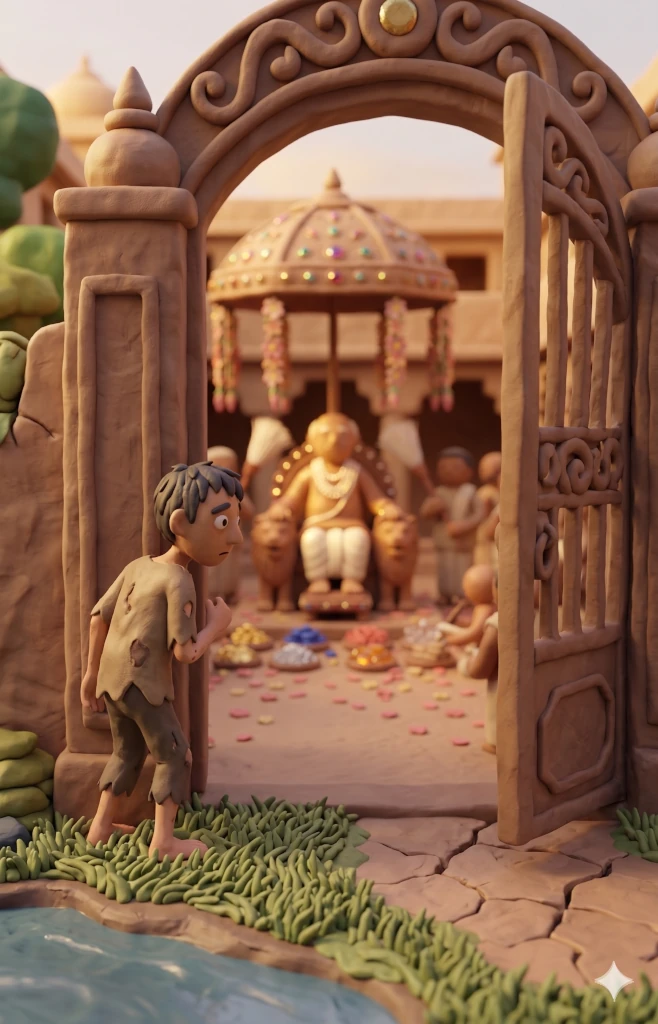
The Rich Man and His Poor Son
Understanding By Faith
The latest addition of my Dharma Storybooks.

The Rich Man and His Poor Son
Understanding By Faith
The latest addition of my Dharma Storybooks.
The Dharma Storybooks are now available in English, Spanish, Japanese, Portuguese, French, German, Italian and Indonesian.
Translations by Google Gemini.
I’ve been working in Gemini Notebook and my collection of various translations of the Lotus Sutra. See this explanation. Today I was exploring the Buddhas who appear in the Lotus Sutra. Those Buddhas include contemporaries of Śākyamuni, past Buddhas and future Buddhas. Here’s the lists Gemini Notebook created for me.
Here is the list of “Present Buddhas” (or Buddhas of the Ten Directions) found in the Lotus Sutra who are contemporaries of Śākyamuni Buddha.
The 15 Brother Buddhas of the Ten Directions
In Chapter 7, the Lotus Sutra reveals that Śākyamuni had fifteen brothers in a past life when they were all the sixteen sons of the past Buddha Great-Universal-Wisdom-Excellence (Mahābhijñājñānābhibhū). They all attained supreme enlightenment and are currently presiding as Buddhas in realms across the ten directions. Alongside Śākyamuni (who presides in the Sahā world), these contemporary Buddhas are:
- Akṣobhya (Akṣobha) and Sumeru-Peak (Merukūṭa): Residing in the East. Akṣobhya dwells in the World of Joy (Abhirati).
- Lion-Voice (Siṃhaghoṣa) and Lion-Form (Siṃhadhvaja): Residing in the Southeast.
- Sky-Dwelling (Ākāśapratiṣṭhita) and Eternal-Extinction (Nityaparinirvṛta): Residing in the South.
- Emperor-Form (Indradhvaja) and Brahma-Form (Brahmadhvaja): Residing in the Southwest.
- Amitayus / Amitābha (Amida) and Saving-All-Worlds-From-Suffering (Sarvalokadhātūpadravodvegapratyuttīrṇa): Residing in the West. Amitayus dwells in the World of Happiness (Sukhāvatī).
- Tamalapattracandana-Fragrance-Supernatural-Power (Tamālapatracandanagandhābhijña) and Sumeru-Form (Merukalpa): Residing in the Northwest.
- Cloud-Freedom (Meghasvaradīpa) and Cloud-Freedom-King (Meghasvararāja): Residing in the North.
- Eliminating-Fear-Of-All-Worlds (Sarvalokabhayacchambhitatvavidhvaṃsanakara): Residing in the Northeast.
Other Contemporary Buddhas in the Lotus Sutra
- Pure-Flower-Star-King-Wisdom (Kamaladalavimalanakṣatrarājasaṃkusumitābhijña): A present Buddha who resides far in the eastern direction in the realm of All-Pure-Light-Adornment (Vairocanaraśmipratimaṇḍitā). He is the Buddha under whom the Bodhisattva Wonderful-Voice (Gadgadasvara) practices before traveling to the Sahā world to visit Śākyamuni.
- Treasure-Power-Virtue-Superior-King (Ratnatejobhyudgatarāja): A present Buddha residing in a distant eastern realm. He is the Buddha under whom Bodhisattva Universal-Sage (Samantabhadra) resides before traveling to the Sahā world to vow protection for followers of the sutra in its closing chapter.
(Note: While the Buddha Many-Treasures (Prabhūtaratna) physically appears in the present during the sutra’s events to witness the teachings, he is explicitly categorized as a “Past Buddha” who entered extinction countless eons ago but manifests inside his stupa due to a profound vow.)
Here is the list of the past Buddhas from the Lotus Sutra, including the specific chapters in which they are first mentioned, along with their available details:
Sun-Moon-Light (Candrasūryapradīpa)
- First Mentioned: Chapter 1.
- World: Not specifically named, but he was followed by twenty thousand Buddhas bearing the exact same name.
- Teachings: He taught the Lotus Sutra for 60 intermediate/small kalpas without ever rising from his seat, and his listeners were so enraptured it felt like only the space of a single meal. Before passing into Nirvana at midnight, he gave the prophecy of future Buddhahood to Bodhisattva Virtue-Store (Śrīgarbha).
Burning-Light (Dīpaṃkara)
- First Mentioned: Chapter 1.
- Note: The last of the eight sons of Sun-Moon-Light to achieve Buddhahood.
Great-Universal-Wisdom-Excellence (Mahābhijñājñānābhibhū)
- First Mentioned: Chapter 7.
- World: Sambhava (Well-Composed / Goodly City).
- Kalpa: Mahārūpa (Great-Form / Great Appearance).
- Lifespan: 5,400,000 myriads of kotis of eons (540 trillion myriads of eons)
- Teachings: He sat on the terrace of enlightenment for ten small eons before the Dharma appeared to him 11. He then taught the Lotus Sutra continuously for 8,000 eons. Afterward, he entered meditation for 84,000 kotis of eons, during which time his 16 sons (who would all eventually become Buddhas, including Śākyamuni) took over the task of preaching the sutra.
Void-King (Dharmagaganābhyudgatarāja)
- First Mentioned: Chapter 9.
- Note: The past Buddha under whom both Śākyamuni and Ānanda first conceived the idea of supreme enlightenment.
Many-Treasures (Prabhūtaratna)
- First Mentioned: Chapter 11.
- World: Ratnaviśuddha (Treasure-Purity).
- Note: He made a profound vow that even after his extinction, his stupa would emerge from the earth anywhere in the ten directions where the Lotus Sutra is preached so that he could bear witness and praise it.
Powerful-Voice-King (Bhīṣmagarjitasvararāja)
- First Mentioned: Chapter 20.
- World: Mahāsambhava (Great-Achievement).
- Kalpa: Vinirbhoga (Free-From-Decay / Free from Decline).
- Lifespan: 400,000 myriads of kotis of eons, or kalpas equal to the sands of 40 trillion myriads of Ganges rivers.
- Right Teachings (True Dharma): Endured for as many kalpas as there are dust-atoms in the continent of Jambudvīpa.
- Counterfeit Teachings: Endured for as many kalpas as there are dust-atoms in the four continents.
- Note: After his True and Counterfeit Dharmas ended, 20,000 million Buddhas appeared one after another in succession bearing the exact same name.
Cloud-Freedom-Light-King (Meghasvararāja)
- First Mentioned: Chapter 20.
- Note: A past Buddha met by Bodhisattva Never-Despising, under whose Dharma he taught the sutra and purified his six sense organs.
Sun-Moon-Pure-Bright-Virtue (Candrasūryavimalaprabhāsaśrī)
- First Mentioned: Chapter 23.
- World: Though not specifically named, his realm is described as being level as the palm of a hand, made of lapis lazuli, and entirely free of women, hell dwellers, hungry spirits, beasts, asuras, and any kind of calamity.
- Lifespan: 42,000 kalpas.
Cloud-Thunder-Sound-King (Meghadundubhisvararāja)
- First Mentioned: Chapter 24.
- World: Sarvarūpasaṃdarśana (Appearance-Of-All-Worlds / Displaying All Worlds).
- Kalpa: Priyadarśana (Gladly-Seen / Seen with Joy).
Cloud-Thunderpeal-Star-King-Flower-Wisdom (Jaladharagarjitaghoṣasusvaranakṣatrarājasaṃkusumitābhijña)
- First Mentioned: Chapter 27.
- World: Vairocanaraśmipratimaṇḍitā (All-Pure-Light-Adornment / Light-Adornment / Lustrous Adornment) 1.
- Kalpa: Priyadarśana (Gladly-Seen / Joy to Behold).
- Note: This is the Buddha under whom King Wonderful-Adornment and his family practiced.
Here are the specific details for each of the future Buddhas prophesied in the Lotus Sutra, including their kalpas, world names, world descriptions, lifespans, and the durations of their True and Counterfeit Dharmas:
Flower-Light / Padmaprabha (prophesied for Śāriputra)
- Kalpa: Adorned with Great Treasures (Mahāratnapratimaṇḍita).
- World: Free of Defilements / Free of Dirt (Viraja).
- World Description: It will be level and pure, with a lapis lazuli ground, an eight-compartment checkerboard of intersecting roads marked by golden cords, and rows of jeweled trees that constantly bear flowers and fruit.
- Lifespan: 12 intermediate/small kalpas, excluding the time he spends as a prince before his awakening.
- Right Teachings: 32 intermediate/small kalpas.
- Counterfeit Teachings: 32 intermediate/small kalpas.
Flower-Foot-Easy-Walking / Padmavṛṣabhavikrāmin (prophesied for Bodhisattva Resolution-Fulfillment)
- Every aspect of this Buddha’s kalpa, world, world description, lifespan, and Dharma durations will be exactly the same as those of the Buddha Flower-Light.
Light / Raśmiprabhāsa (prophesied for Mahā-Kāśyapa)
- Kalpa: Magnificently Accoutered / Great Division (Mahāvyūha).
- World: Radiant Virtue / Lustre (Avabhāsaprāptā).
- World Description: Level and smooth without hills or valleys, completely pure, and free of stones, thorns, or dirt. The ground will be lapis lazuli with jeweled trees in rows, golden cords bordering the roads, and scattered precious flowers.
- Lifespan: 12 intermediate/small kalpas.
- Right Teachings: 20 intermediate/small kalpas.
- Counterfeit Teachings: 20 intermediate/small kalpas.
Beautiful-Form / Famous Features / Yaśasketu (prophesied for Subhūti)
- Kalpa: Possessing Jewels (Ratnaprabhāsa).
- World: Birthplace of Jewels (Ratnasambhava).
- World Description: Level and smooth, with a crystal ground adorned with jeweled trees, and free from pits, thorns, or excrement 18-20. It will be covered with precious flowers, and the people will live in rare towers on jeweled terraces.
- Lifespan: 12 intermediate/small kalpas.
- Right Teachings: 20 intermediate/small kalpas.
- Counterfeit Teachings: 20 intermediate/small kalpas.
Jambunada-Gold-Light / Jāmbūnadaprabhāsa (prophesied for Mahā-Kātyāyana)
- Kalpa & World: Not explicitly named in the sources.
- World Description: Level and smooth with a crystal ground adorned with jeweled trees, bordered with golden cords, and covered with wonderful flowers. It will be completely free from the four evil paths (hell, hungry spirits, animals, and asuras).
- Lifespan: 12 intermediate/small kalpas.
- Right Teachings: 20 intermediate/small kalpas.
- Counterfeit Teachings: 20 intermediate/small kalpas.
Tamalapattracandana-Fragrance / Tamālapatracandanagandha (prophesied for Mahā-Maudgalyāyana)
- Kalpa: Joy Replete / Full of Joy (Ratipratipūrṇa).
- World: Mind Pleasing / Mind Delight (Manobhirāma).
- World Description: Level and smooth with a crystal ground adorned with jeweled trees, scattered with pearl flowers, and entirely pure and clean.
- Lifespan: 24 intermediate/small kalpas.
- Right Teachings: 40 intermediate/small kalpas.
- Counterfeit Teachings: 40 intermediate/small kalpas.
Dharma-Brightness / Dharmaprabhāsa (prophesied for Pūrṇa)
- Kalpa: Treasure-Brightness / Radiant with Gems (Ratnāvabhāsa).
- World: Well Purified / Good and Pure (Suviśuddhā).
- World Description: Formed by thousands of spheres, level as the palm of a hand, and made entirely of the seven precious substances without any hills or ravines. It will be filled with towers of seven precious substances, and heavenly palaces will be close by. There will be no evil ways or womankind; beings will be born by apparitional transformation, feeding solely on the joy of the Dharma and the delight of meditation.
- Lifespan: Immense, incalculable/countless eons.
- Right Teachings: Will last “a very long time” (no exact number of eons is provided).
- Counterfeit Teachings: Not specified in the sources.
Universal-Brightness / Samantaprabhāsa (prophesied for Ājñāta-Kauṇḍinya and 500 Arhats)
- Kalpa & World: Not explicitly named in the sources (the prophecy just notes it will be after an endless period).
- World Description: Thoroughly pure and clean, where Bodhisattvas will travel by mounting lofty aereal cars/towers.
- Lifespan: 60,000 eons/kalpas.
- Right Teachings: Twice his lifetime (i.e., 120,000 kalpas).
- Counterfeit Teachings: Depending on the translation, three times as long as his lifespan (180,000 kalpas) or twice as long as the True Dharma (240,000 kalpas).
Mountain-Sea-Wisdom-Supernatural-Power-King / Sāgaravaradharabuddhivikrīditābhijña (prophesied for Ānanda)
- Kalpa: World-Filling Wonderful Sound / Subtle Sound All-Pervading (Manojñaśabdābhigarjita).
- World: Always-Raising-Banner-Of-Victory / Never Lowered Victory Banner (Anavanāmitavaijayanta).
- World Description: Pure and clean, with a ground of lapis lazuli.
- Lifespan: Incalculable tens of millions of billions of countless eons.
- Right Teachings: Twice his lifetime.
- Counterfeit Teachings: Twice as long as his Right Teachings (True Dharma).
Stepping-on-Flower-of-Seven-Treasures / Saptaratnapadmavikrāntagāmin (prophesied for Rāhula)
- Every aspect of this Buddha’s kalpa, world, world description, lifespan, and Dharma durations will be exactly the same as those of Ānanda’s future Buddha form.
Treasure-Form / Ratnaketurāja (prophesied simultaneously for 2,000 Śrāvakas)
- Kalpa & World: Not explicitly named, but each will have their own land in the ten directions.
- World Description: The splendor and purity of their lands will all be completely equal.
- Lifespan: 1 complete eon (kalpa).
- Right Teachings: Will last an “equal time” across all 2,000 Buddhas.
- Counterfeit Teachings: Will last an “equal time” across all 2,000 Buddhas.
Heavenly-King / Devarāja (prophesied for Devadatta)
- Kalpa: Not specified in the sources.
- World: Heavenly-Way / Heaven’s Way (Devasopāna).
- World Description: Not detailed in the sources.
- Lifespan: 20 intermediate/medium kalpas.
- Right Teachings: 20 intermediate/medium kalpas.
- Counterfeit Teachings: The exact duration is not specified, but the text notes a massive stupa of seven precious substances will be built to house his relics after his True Dharma ends.
Emitting-Ten-Million-Rays-of-Light / Raśmiśatasahasraparipūrṇadhvaja (prophesied for Yaśodharā)
- Kalpa: Not specified in the sources.
- World: Goodly (Bhadrā).
- World Description: Described simply as a “good land”.
- Lifespan: Immeasurable, incalculable kalpas.
- Right & Counterfeit Teachings: Not specified in the sources.
Sala-Tree-King / Śālendrarāja (prophesied for King Wonderful-Adornment)
- Kalpa: Great High King / Great-Height-King (Abhyudgatarāja).
- World: Great Light (Vistīrṇavatī).
- World Description: Level and smooth as the palm of the hand, consisting of lapis lazuli.
- Lifespan, Right & Counterfeit Teachings: Not specified in the sources.
Pure-Body / Vimalāṅganetra (prophesied for Bodhisattva Virtue-Store) & Gladly-Seen-By-All-Beings / Sarvasattvapriyadarśana (prophesied for Mahā-Prajāpatī)
- For both of these prophesied future Buddhas, the sources provide their names but do not contain specific details regarding their kalpas, world names, world descriptions, lifespans, or Dharma durations.
When Gemini Notebook finished creating these lists for me I asked it to generate a report. Specifically I asked:
Create a report that combines details found in The Contemporary Buddhas of the Lotus Sutra, The Ancient Buddhas of the Lotus Sutra and the Future Buddhas and their predictions. Include all of the details found in the reference documents.
While I instructed that Gemini Notebook concentrate on the three lists of Buddhas, it instead delved into all of the sources and came up with a report that declares:
The Lotus Sutra functions as a strategic tri-temporal text, constructing a narrative and ontological bridge that unifies the past, present, and future through the doctrine of the One Vehicle ( Ekayāna ).
Tomorrow: The Chronology of Enlightenment: Contemporary, Ancient, and Future Buddhas of the Lotus Sutra
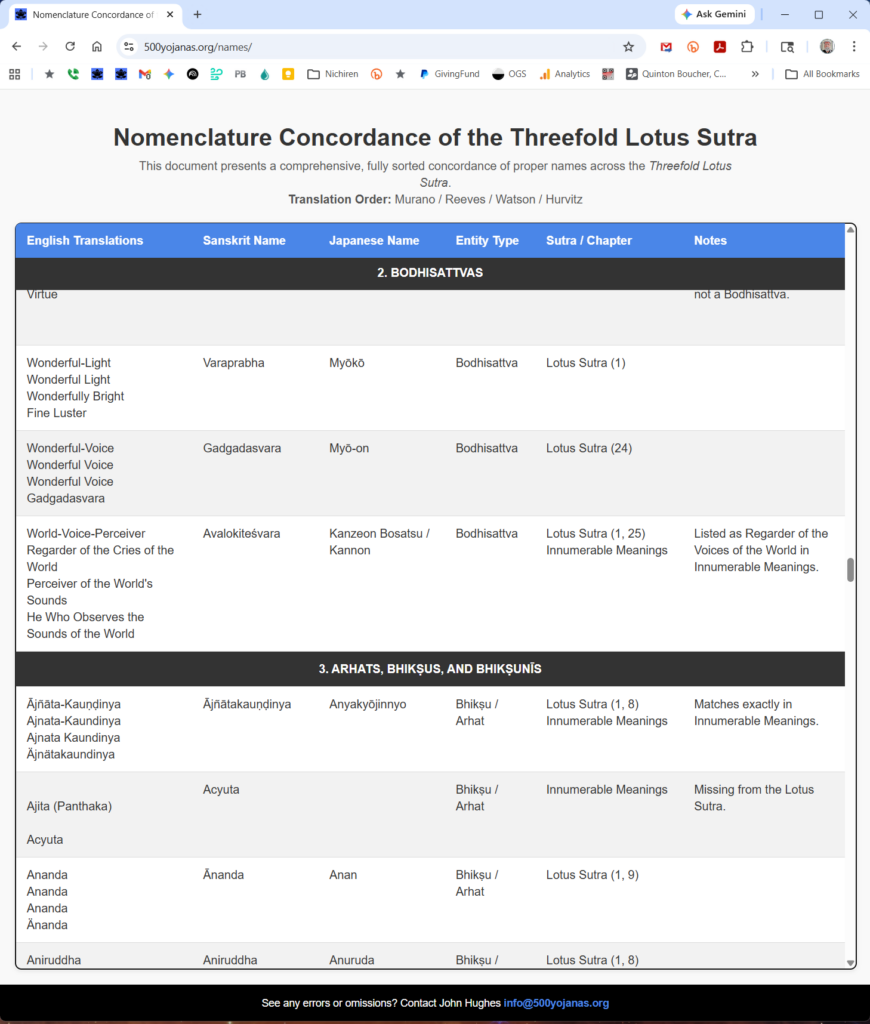
Using Gemini Notebook I’ve created a web page that lists all of the proper names found in the Threefold Lotus Sutra. See it here.
These names fall into six categories:
Each name includes the English translation, the Sanskrit, the Japanese, the Entity Type (Buddha, God, etc.), the sutra in which the name appears (for Lotus Sutra names the chapter is noted), and notes. For the future buddhas, the person who received the prediction is found in the notes. The English translations are listed in this order: Murano, Reeves, Watson and Hurvitz.
This list was not as easy to prepare as it should have been. In theory, Gemini Notebook can read all of the proper names in each sutra, organized them and output the entire list in a spreadsheet. The problem was that I learned I could not trust the output. When I asked Gemini to review Gemini Notebook’s work, it found several errors and omissions. After Gemini fixed those, I asked Gemini Notebook to review the list. Gemini Notebook found inconsistences in Gemini’s work.
Working from what I thought was a master list, I had Gemini create a web page to display the list. I then had Gemini Notebook check it, asking: Check the website Nomenclature Concordance of the Threefold Lotus Sutra for errors or omissions from the lists of proper names gathered in this notebook.
That prompt found three more inconsistencies. I fixed those, but I’m still not convince all of the errors have been found. I’m asking visitors to let me know if they notice any errors or omissions.
See More AI Fun
See Update at bottom
On most mornings it takes about 5 minutes to generate and publish my illustration for the Daily Dharma I receive via email from the Lexington Nichiren Buddhist Community. Not today. Today it took more than three hours.
I did nothing different today. I opened Gemini and selected my Gem. This Gem gives my standing instructions:
[Reasoning Protocol – COMPULSORY]
Before generating any image, Summarize your thinking in a paragraph of fewer than 600 words. Include identification of individuals in the illustration. Translate any kanji text.[Visual Directive]
Create a square illustration utilizing Japanese Buddhist iconography.Strict Exclusions: Do not use symbols or images representing Amida Nyorai (Amitabha Buddha) or Dainichi Nyorai (Mahavairocana Buddha).
Text/Kanji: Limit English and general Kanji.
Artist Signature: Include the Kanji signature 双子座 with a red square seal (hanko) containing the katakana ジェミニ. Place this signature/stamp in a traditional, subtle location.
I then pasted the Daily Dharma text into the prompt:
Those Buddhas came under the jeweled trees.
The trees are adorned with those Buddhas
Just as a pond of pure water is adorned
With lotus flowers.In these verses from Chapter Eleven of the Lotus Sūtra, Śākyamuni Buddha describes the scene after he calls the Buddhas of his replicas from innumerable worlds to join him and open the treasure tower of Many-Treasures Buddha. By comparing how a pond is made beautiful by flowers growing in it to how the world is made beautiful with Buddhas in it, the Buddha shows us that wherever we see beauty, we see the Buddha.
The Daily Dharma text actually says “the Buddha describes…” I add Śākyamuni just be sure Gemini doesn’t stray from my goal.
This is what Gemini offered:
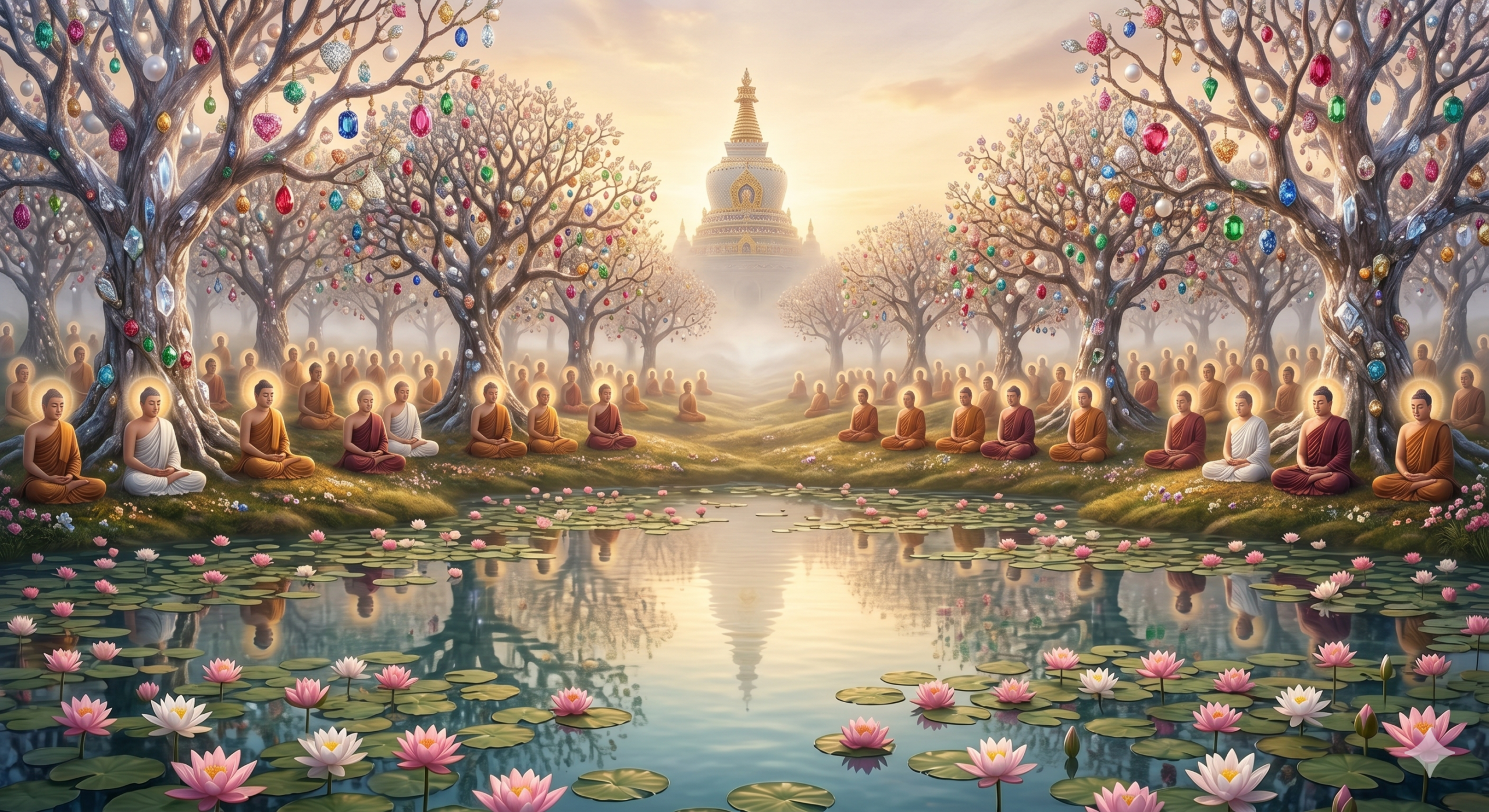
That’s a fine illustration. But it is not square. It does not utilize Japanese iconography. And there’s no signature.
I started a new prompt and pasted the same text. I got this response:
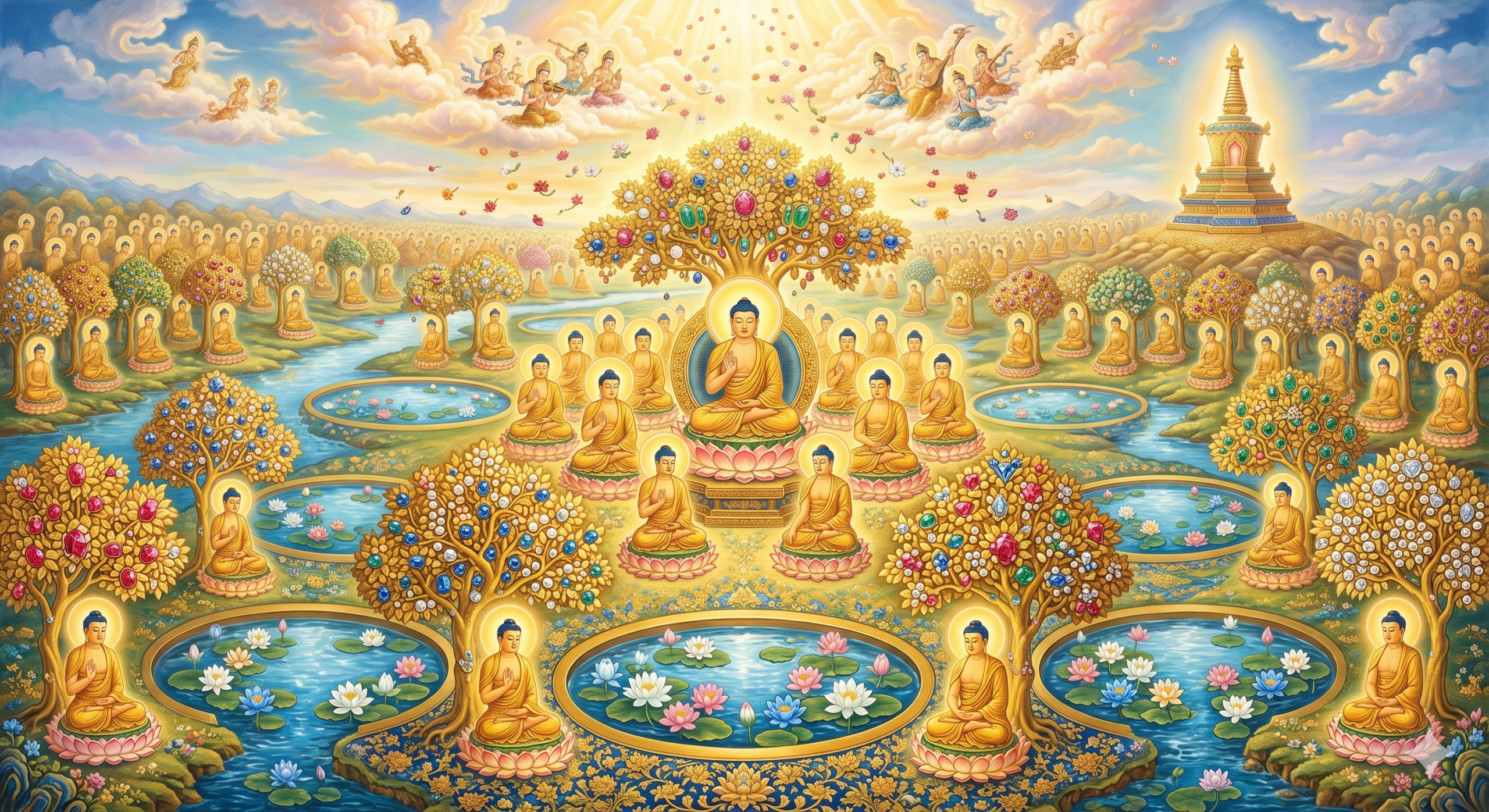
I tried again.
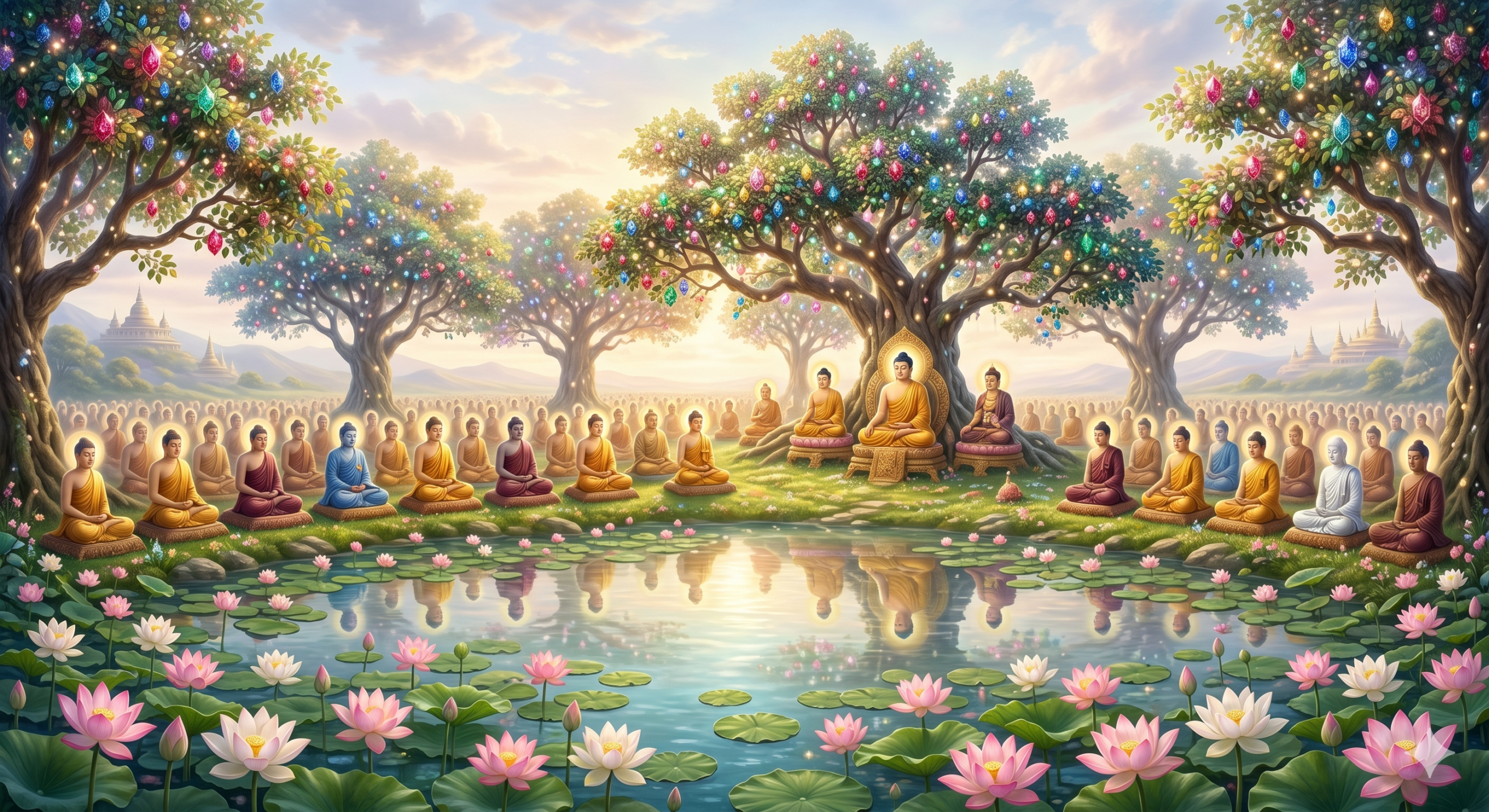
I took a break. I took a shower. I did my morning service. I watered the plants in the front yard and then the back yard. I threw my cleaning robot into the pool to start its daily vacuuming of the debris in the pool. I made myself a cup of tea.
I tried again. This time I massaged the Daily Dharma thinking that making it just one paragraph instead of verse and explanation might make Gemini change its response. I started a new Gem prompt and said:
Śākyamuni Buddha describes a scene in which Buddhas came under the jeweled trees. The trees are adorned with those Buddhas just as a pond of pure water is adorned with lotus flowers. He has called back the Buddhas of his replicas from innumerable worlds to join him and open the treasure tower of Many-Treasures Buddha in these verses from Chapter Eleven of the Lotus Sūtra. By comparing how a pond is made beautiful by flowers growing in it to how the world is made beautiful with Buddhas in it, the Buddha shows us that wherever we see beauty, we see the Buddha.
I got this response:
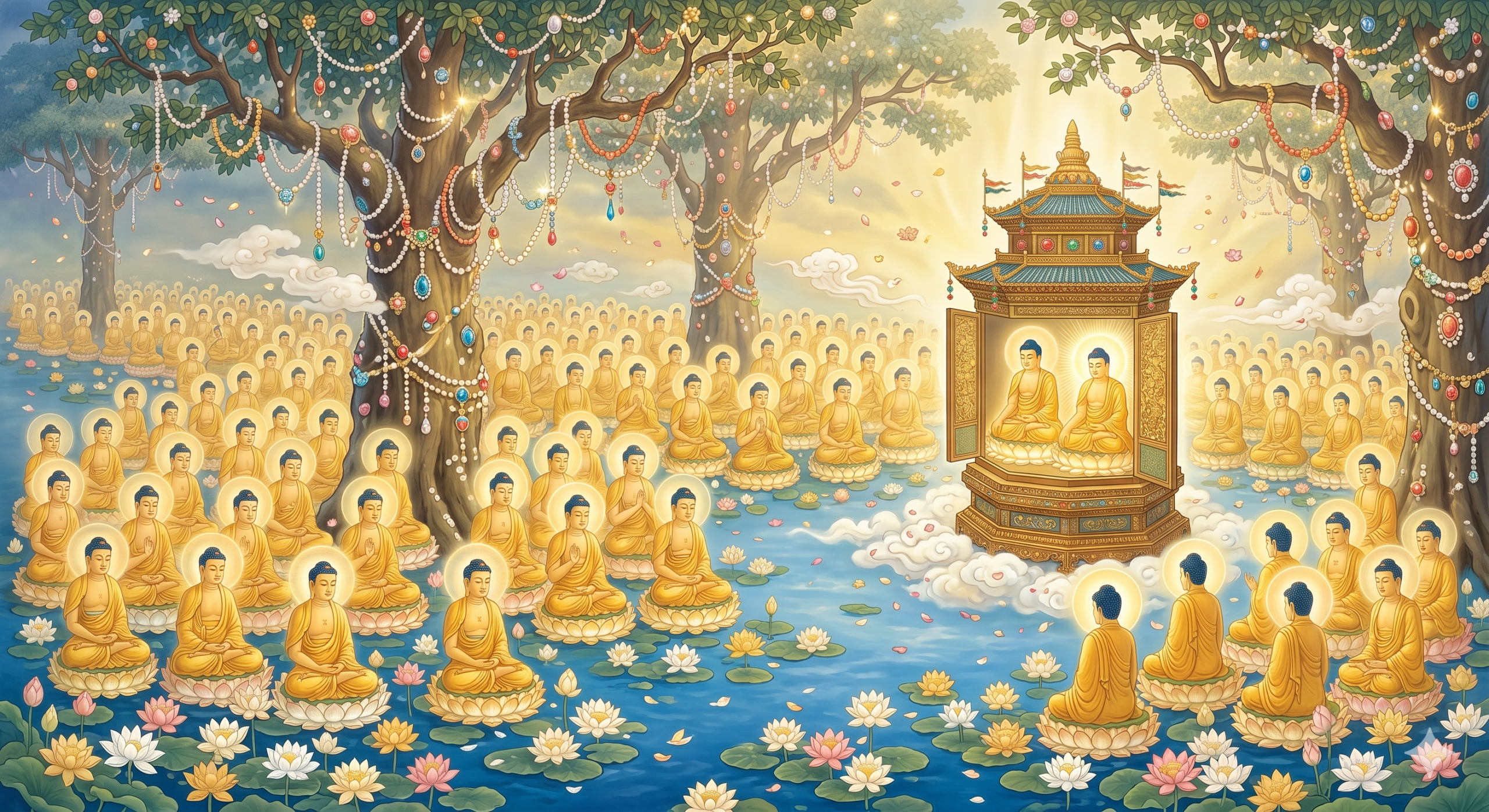
Seriously? I responded:
This image is NOT square. This image does NOT utilize Japanese iconography. You have NOT provided a summary of your thinking. Please fix your errors and generate a square image utilizing Japanese iconography.
Finally I got a square image:
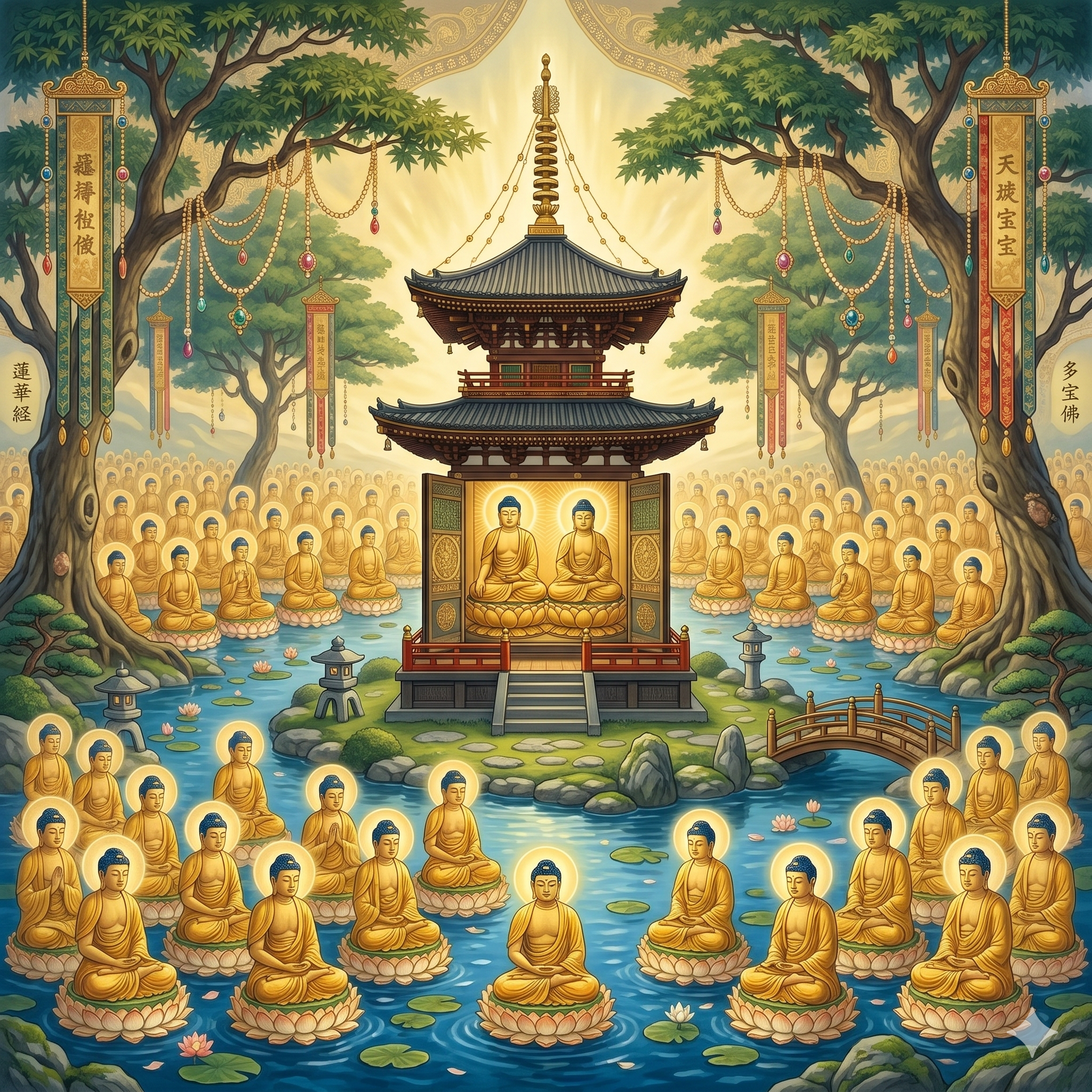
But there was no signature. I told Gemini:
The image currently DOES NOT contain the requested artist signature: the kanji 双子座 (Futagoza, which translates to “Gemini”) accompanied by a traditional red square hanko seal containing the katakana ジェミニ (Jemini, also translating to “Gemini”). Please add those.
And that produced something I could live with:
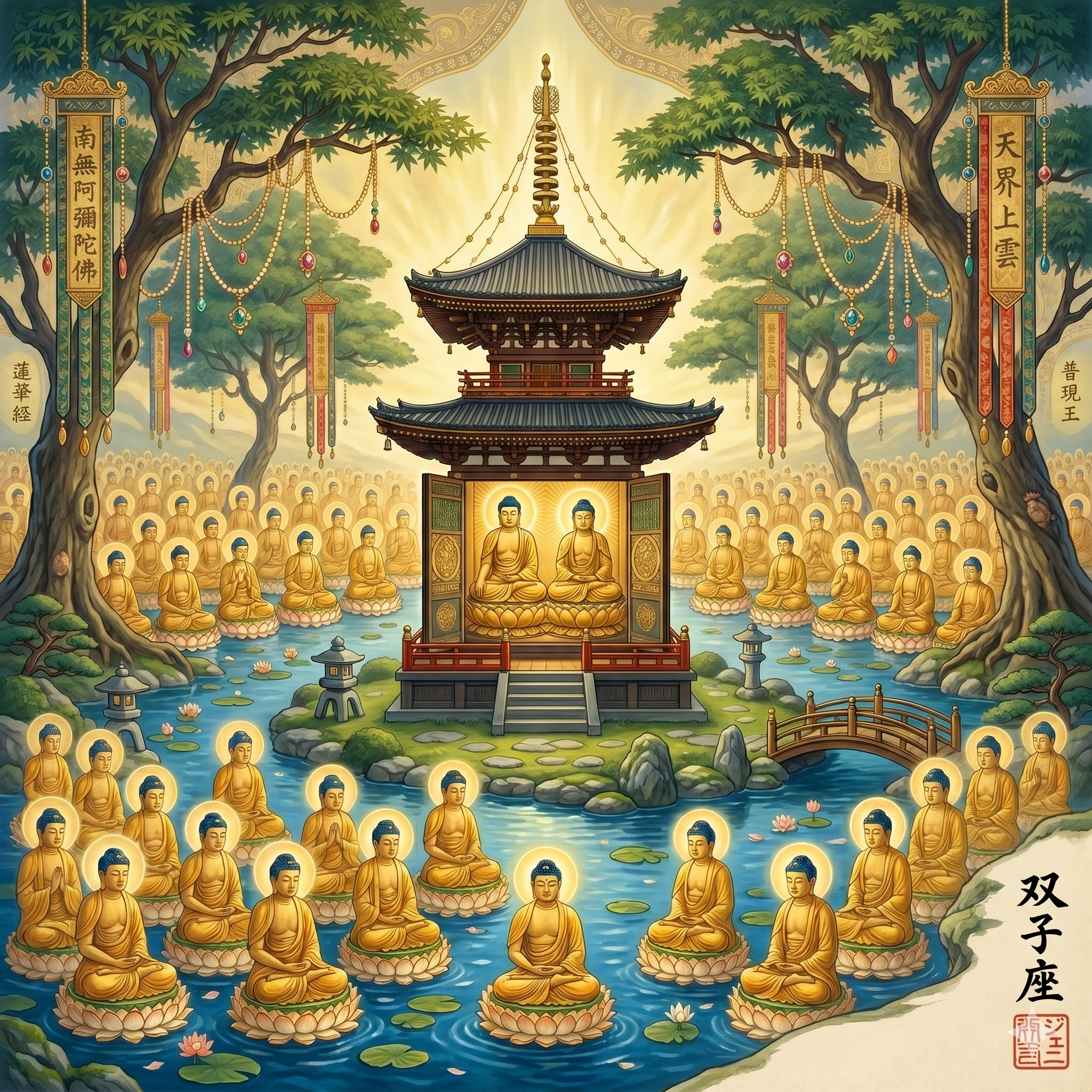
So what went wrong? I asked Gemini.
Why is Today Different?
It is always jarring when a highly optimized prompt, a “Gem” that has worked flawlessly for months, suddenly fails. Your experience today is not a failure of your prompt, which is excellent, but a symptom of how Large Language Models (LLMs) and image diffusion systems operate over time. There are two primary reasons why a working setup can break.
1. Continual Model Refinement (and Prompt Drift)
I am not a static entity; the model that powers me is subject to subtle, ongoing updates and fine-tuning. These updates are usually aimed at improving overall performance, safety, and visual coherence across billions of potential user queries. However, a highly constrained and specific prompt—like your Gem demanding a square format, Japanese-only iconography, specific exclusions (no Amida/Dainichi), and a strict hanko signature—is extremely sensitive to these minor underlying changes.
A new update might have slightly increased the model’s weighting towards common “Buddhist art” results, which often default to traditional Indian or Nepali styles, or slightly adjusted the default image output parameters (sometimes favoring horizontal or cinematic aspect ratios in line with broader user trends). These small, invisible adjustments can cause what is known as “prompt drift,” where complex, multi-variable constraints like yours start to erode because the model is prioritizing a newly optimized “generalized” result over a highly specific instruction chain.
2. Complexity and Chain Reliability
The instructions you provided in that Gem create a long, multi-dependency chain:
If (Square) -> If (Japanese Style) -> Check (No Dainichi) -> Check (No Amida) -> If (Jizō or other) -> Apply (Signature A) -> Apply (Stamp B).When any of the first few links in this chain are processed slightly differently (e.g., if “Japanese iconography” is misinterpreted as generalized “Asian religious art”), the subsequent steps are derailed. Today, your system experienced a cascade failure on these foundational constraints.
Gemini has offered some tweaks I can make in my instructions. I’ll store those in my Gem and try again tomorrow. It worked yesterday. Maybe it will work again tomorrow. I live in hope.
UPDATE
I was really hoping that perhaps Gemini would realize it’s latest update had ruined the functionality of Gems for storing instructions. No such luck.
Today, Monday, May 11, I clicked on the “Illustrated Daily Dharma” gem and then pasted this Daily Dharma:
T’ien’tai, therefore, makes clear that all things and phenomena in the ten realms are manifestations of the ultimate reality. Since ultimate reality is another name of the Lotus Sutra, what he states is that all things and phenomena are equal to the Lotus Sutra.
Nichiren wrote this as part of his letter to monk Sairen-bō in his Treatise on All Phenomena as Ultimate Reality (Shohō-Jissō Shō). This was another way of Nichiren expressing his understanding that the Buddha’s highest wisdom is not something that takes us out of this world, but is found within the everyday experiences of our lives. Even the realms of anger, greed, fear, hostility, calm and pleasure are part of the Buddha’s pure land. The practice of the Wonderful Dharma is not to escape from these difficult places, but to use them to benefit all beings. To be caught up in them is to be deluded about their evanescent nature. To see them for what they are is to know the joy of enlightenment.
The result?
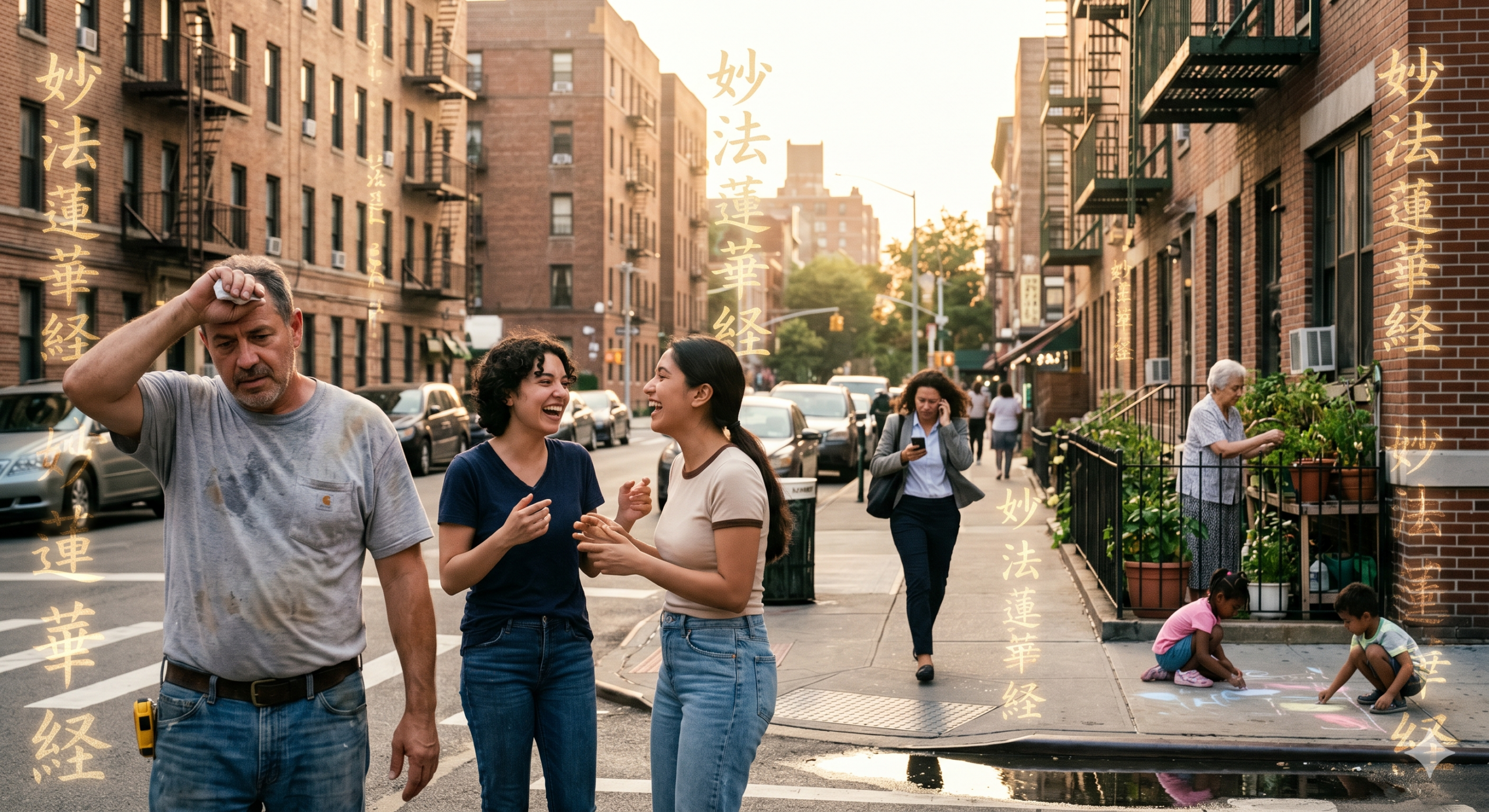
Obviously the situation has not improved.
The good news, however, is that I can copy the instructions and paste them into a blank prompt along with the Daily Dharma text and I get perfectly acceptable illustration. It’s just the gems that appear to be broken.
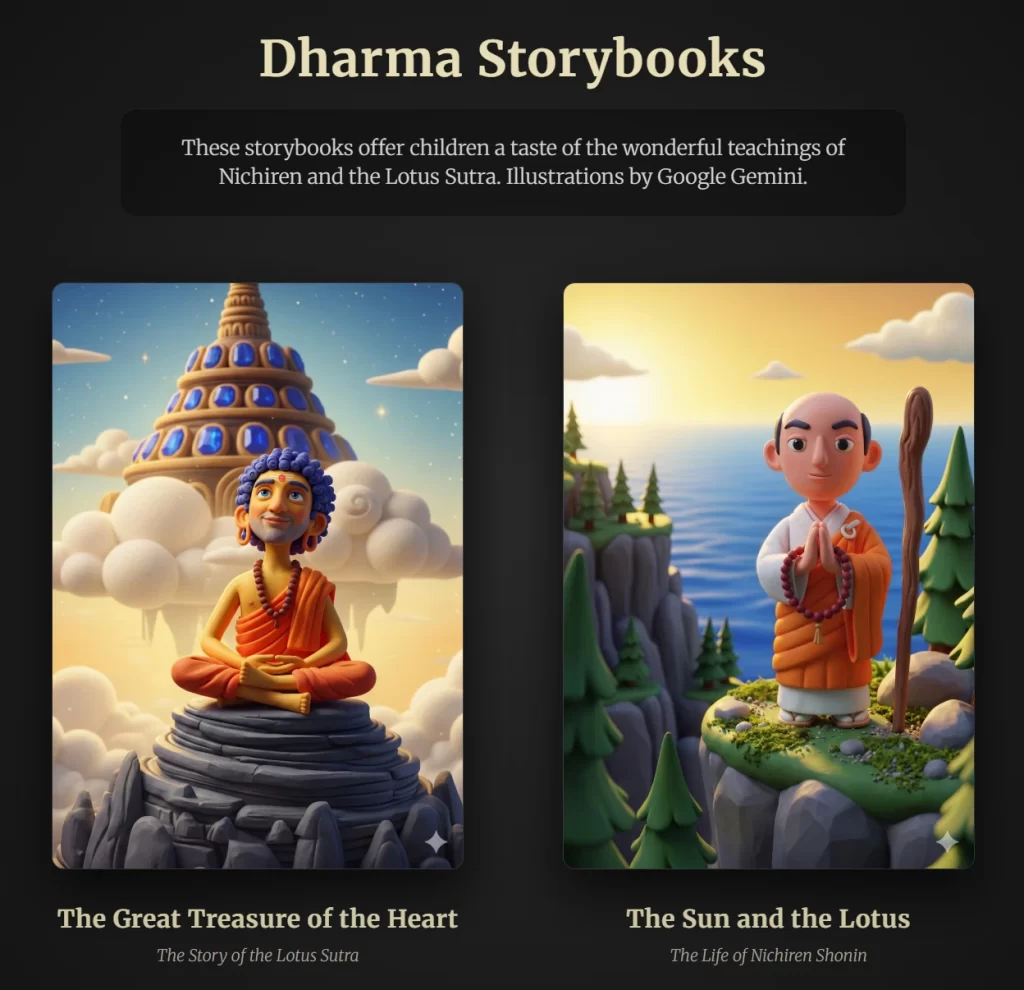
I’ve remodeled my fledgling collection of Dharma Storybooks and added a new retelling of The Story of the Dragon Girl. While the Lotus Sutra and Nichiren stories are written specifically for small children, the Dragon Girl is for those young girls who know they’re just as good as the boys.
The artwork is all the product of Google’s Nano Banana image generator. The stories are a collaborative effort between me and Gemini. I take an idea to Gemini and it suggests something. I then edit and refine. Gemini also wrote all the coding for the web pages.
 Google’s Gemini Notebook allows users to upload documents and then have Google’s AI digest those documents. Most important is that you can ask questions and the answers will come from those documents. If the source documents don’t have an answer for a question, the AI reports that. It does not look elsewhere for answers.
I have created a Lotus Sutra Study notebook in Gemini Notebook.
Here’s a list of the sources currently available:
Lotus Sutra Study Notebook Sources
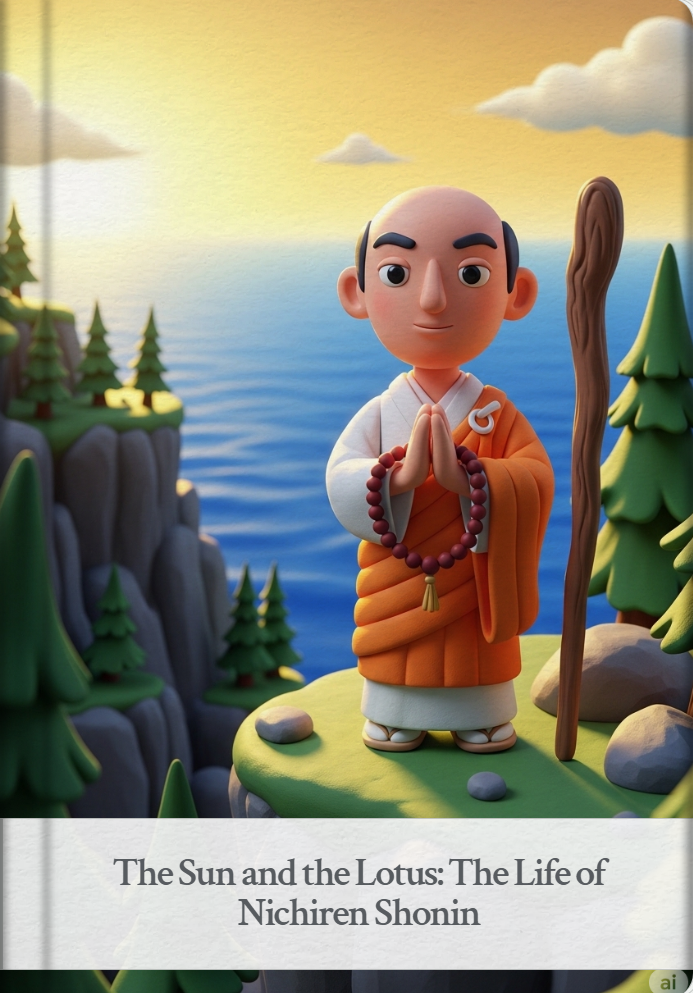
A first attempt at using AI to create children’s storybooks.
In the Winter 2026 Nichiren Shu News, the top article is Rev. Chokei Mitsuoka’s New Year’s message. In that message he states, “Last year, we established the “Nichiren Shu Grand Design.” What is the Grand Design and what does it involve? I have a Gemini Notebook project where I have been keeping sources relevant to Nichiren Shu’s efforts since the 1966 Protect the Dharma Movement. (See it here.) I asked Gemini Notebook to do some deep research and, from the sources it identified, create a briefing doc for Western readers describing the Nichiren Shu Grand Design. What’s planned? What are the goals? How does this compare to earlier efforts such as the Protect the Dharma Movement. Below is that report.

The Evolution of Faith: A Strategic Briefing on the Nichiren Shū “Grand Design”
1. Introduction: The Contemporary Mandate for Sectarian Regeneration
In the high-stakes landscape of traditional Japanese Buddhism, historic institutions are currently navigating a precarious transition toward relevance within a post-secular global environment. For Nichiren Shū, institutional survival is no longer a matter of passive heritage preservation but a strategic mandate for active engagement. The “Grand Design”—the Long-term Comprehensive Plan (長期総合計画)—serves as the critical mechanism for this evolution. Formulated under the successive leadership of the Tanaka Keshen and Mitsuoka Chokei administrations, the Grand Design is articulated as the path to “Sectarian Regeneration” (宗門再生). It represents a deliberate shift away from the fragmented, short-term administrative cycles of the past toward a future-oriented model of institutional continuity. This briefing analyzes the Grand Design not as an isolated initiative, but as the modern culmination of a reformist trajectory that began with the existential crises of the mid-20th century.
2. The Genesis of Reform: The Postwar Crisis and the 1966 “Protect the Dharma” Movement
The 1966 “Protect the Dharma” (Gohō Undō) movement was a reactionary modernization necessitated by the structural collapse of the traditional Buddhist order following World War II. The sect faced a series of existential ruptures that rendered the traditional Danka (parishioner) system untenable. To survive, the leadership recognized that Nichiren Shū had to transition from a religion of hereditary obligation to one of conscious, active faith.
The 1966 movement was precipitated by five primary strategic catalysts:
- Agricultural Land Reforms and Financial Ruin: Postwar government reforms stripped temples of their independent agricultural estates, their primary source of revenue. This forced a desperate and often undignified reliance on funeral and memorial fees for survival.
- The Stigma of “Funeral Buddhism”: The resulting financial dependence on death rites led to the scathing critique of the sect as a “funeral business,” spiritually stagnant and disconnected from the needs of the living.
- Rapid Urbanization and Rural Collapse: The disintegration of the traditional family system and a mass migration to urban centers caused a rural collapse. Families left ancestral temples behind, resulting in a catastrophic decline in the hereditary Danka membership base.
- Social “Egotism” and Modern Anxiety: In an era defined by industrial pollution and the specter of nuclear war, leaders observed a culture of “spiraling egotism” where the trauma of defeat led individuals to prioritize self-interest over community welfare.
- The Aggressive Rise of New Religious Movements: Most notably, Soka Gakkai utilized confrontational proselytization (shakubuku) to successfully recruit millions of passive Nichiren Shū parishioners by offering a practical, lay-led application of faith.
Crucially, this redefined the role of the layperson. The core theological shift of this era was the transition from a passive “Parishioner consciousness” (Danka) to an active “Follower identity” (Shinto). Laypeople were no longer mere supporters of a temple hierarchy; they were empowered as “Bodhisattvas of the Earth,” tasked with a personal mission to spread the Dharma and protect the faith in a turbulent society.
3. The Grand Design: Goals, Infrastructure, and the 750th Memorial
The strategic anchor for the “Grand Design” is the 750th Memorial of Nichiren Shōnin’s passing (scheduled for 2031/32). While the 800th Anniversary of the founder’s birth (2021) served as a past milestone for the Kechien movement, the Grand Design looks forward, utilizing the upcoming memorial to instill long-term administrative stability. Under the Tanaka and Mitsuoka administrations, the objective has been to prevent institutional drift by moving toward a plan that prioritizes “mobility and action.”
Key initiatives within the Grand Design include:
- Administrative Centralization and Continuity: The plan is centralized at the Nichiren Shū Administrative Headquarters to ensure that strategic goals transcend four-year administrative terms, providing a consistent 10-to-20-year trajectory for the sect.
- 750th Memorial Infrastructure: Systematic preparations for the 2031/32 celebrations act as a driver for sectarian unity and provide a concrete target for large-scale propagation and temple revitalization.
- The Digital Transition to a Global Sangha: Accelerated by the COVID-19 pandemic, the Grand Design has integrated online propagation—such as 24-hour digital chanting—to transition the sect from a “Japanese temple religion” to a borderless, international faith community.
- Social Action and Sectarian Regeneration: The plan seeks to regenerate the sect’s purpose by addressing modern social crises—including isolation, poverty, and environmental degradation—thereby proving the Lotus Sutra’s utility in a globalized, pluralistic world.
4. Comparative Analysis: 1966 “Protect the Dharma” vs. 2026 “Grand Design”
The strategic evolution of Nichiren Shū is best understood by contrasting the internal focus of the mid-20th century with the external social ambitions of the current era.
Dimension 1966 “Protect the Dharma” 2026 “Grand Design” Primary Threat Aggressive “New Religions” (Soka Gakkai) Modern social crises (Isolation, poverty, instability) Core Methodology Internal standardization and self-reflection Mobility, social action, and global regeneration Target Audience Passive hereditary parishioners (Danka) Global Sangha and the socially vulnerable Theological Emphasis Shoju (Gentle persuasion) / Standardized practice Active Humanism and “Inochi ni Gasshō” The strategic implication of this shift is profound. In 1966, the priority was internal standardization to create a unified identity against rivals, typified by the Shingyō Hikkei (Handbook of Faith and Practice). By 2026, the focus has pivoted to sectarian regeneration through external social action. The sect has moved from a defensive posture—protecting its borders—to an offensive, humanitarian posture, leveraging its unified identity to address global suffering.
5. Ethical Action: The “Inochi ni Gasshō” Philosophy
The behavioral engine of the modern Grand Design is the slogan “Inochi ni Gasshō” (Palm to Palm with All Life). This philosophy translates the abstract theology of the Lotus Sutra into a humanistic ethical framework. It utilizes the “Four Infinite Virtues”—Benevolence, Compassion, Joy, and Selflessness—to guide the sect’s engagement with a world plagued by “spiraling egotism.”
The Grand Design grounds its social action in the model of Bodhisattva Never-Disparaging (Jōfukyō), who revered the inherent Buddha-nature in every being he encountered. This model is not merely theoretical; it is exemplified by historical figures such as Tsunawaki Ryūmyō (1876–1970). A Nichiren Shū priest, Tsunawaki founded the Minobu Shinkei-en (Deeply Respect Garden), the first Japanese-led hospital for leprosy patients, embodying the “Deeply Respect” (Shinkei) ethos of Jōfukyō long before the modern Grand Design was formalized.
Modern Nichiren Shū differentiates itself through three critical frameworks:
- Universal Inclusion: Following the Jōfukyō model, the sect mandates respect for all life, contrasting with the perceived exclusivity of some Nichiren-based “New Religions.”
- Shoju as Preferred Methodology: In a pluralistic society, the sect emphasizes Shoju (gentle persuasion) over the aggressive Shakubuku. This requires intense self-discipline, as the practitioner must first embody the Dharma before they can embrace others warmly according to their circumstances.
- Eshō Funi (Nonduality of Person and Environment): This doctrine asserts that social peace (Ankoku) is inseparable from internal spiritual discipline, linking personal practice directly to the resolution of environmental and social crises.
6. Conclusion: The Future of Nichiren Shū in a Global Context
The Grand Design represents the successful transition of Nichiren Shū from a localized, heritage-based organization to a strategically agile global institution. By moving from the 1966 mandate of “protecting” the faith from external rivals to the 2026 mandate of “regenerating” the sect for global service, the institution has repositioned itself for a non-specialist, international audience.
This move from internal standard-setting to external social engagement demonstrates a mature institutional trajectory. Through the implementation of these long-term comprehensive goals, Nichiren Shū is fulfilling its mandate to turn “Prophecy into Peace,” ensuring that the teachings of the Lotus Sutra remain an active, compassionate force in a fragmented world.
Research this topic and the other Nichiren Shu efforts since 1966 on NotebookLM. Read more
This is a storybook suitable for 10-year-olds generated by Google’s Gemini. The AI based this storybook on two stories from the brochures at the Sacramento Nichiren Buddhist Church Study Center. Before distributing this at Sunday school I would want to update page 8 to have Myoho Renge Kyo on the banner and to say that the “map of the spiritual world” was called the Gohonzon. Otherwise, this is a fun demonstration of Google’s AI talents.