Category Archives: LS32

Day 12

Day 12 concludes Chapter 7, The Parable of the Magic City, and completes the Third Volume of the Sutra of the Lotus Flower of the Wonderful Dharma.

Having last month begun to repeat the tale of Great-Universal-Wisdom-Excellence Buddha in gāthās, we consider the reaction of the Brahman Heavenly Kings in gāthās.

The palaces of the Brahmans
Of five hundred billion worlds in the east
Were illumined
More brightly than ever.

Traveling to find [the place from where the light had come],
The Brahmans of those worlds came to that Buddha.
They strewed flowers and offered them to him.
They also offered their palaces.

They praised him with gāthās,
And begged him to turn the wheel of the Dharma.
The Buddha sat in silence although he was begged
Because he knew that the time was not yet ripe for that.

The Brahmans came also from the three other quarters,
From the four intermediate quarters, zenith, and nadir.
They strewed flowers, offered their palaces,
And begged the Buddha to turn the wheel of the Dharma, saying:

“It is difficult to meet you.
Open the gate of the teachings as sweet as nectar
Out of your great compassion towards us,
And turn the wheel of the unsurpassed Dharma!”

The mental image of “palaces … illumined more brightly than ever” by the arrival of a new Buddha always inspires. The Buddha’s compassion radiates throughout the universe, casting out the darkness and revealing the gate to the end of suffering.

Day 11

Day 11 continues Chapter 7, The Parable of the Magic City

Having last month witnessed the reaction of the Brahman-heavenly-kings of the five hundred billion worlds in the east to the light emitted by Great-Universal-Wisdom-Excellence Buddha, we consider the reaction of the Brahman-heavenly-kings of the five hundred billion worlds in the southeast.

“Bhikṣus! The great Brahman-[heavenly-]kings of the five hundred billion worlds in the southeast, who saw their palaces illumined more brightly than ever, danced with joy. They also wondered why [their palaces were so illumined]. They visited each other and discussed the reason. There was a great Brahman-heavenly-king called Great-Compassion among them. He said to the other Brahmans in gāthās:

Why is it
That we see this light?
Our palaces are illumined
More brightly than ever.

Did a god of great virtue or a Buddha
Appear somewhere in the universe?
We have never seen this [light] before.
Let us do our best to find [the reason].

Let us go even to the end of one thousand billion worlds,
And find the place from where this light has come.
A Buddha may have appeared somewhere in the universe
In order to save the suffering beings.

“Thereupon the Brahman-heavenly-kings of the five hundred billion [ worlds] went to the northwest, carrying flower-plates filled with heavenly flowers, in order to find [the place from where the light had come]. Their palaces also moved as they went. They [reached the Well-Composed World and] saw that Great-Universal-Wisdom-Excellence Tathāgata was sitting on the lion-like seat under the Bodhi tree of the place of enlightenment, surrounded respectfully by gods, dragon-kings, gandharvas, kiṃnaras, mahoragas, men, and nonhuman beings. They also saw that the sixteen princes were begging the Buddha to turn the wheel of the Dharma. Thereupon the Brahman-heavenly-kings worshipped the Buddha with their heads, walked around him a hundred thousand times, and strewed heavenly flowers to him. The strewn flowers were heaped up to the height of Mt. Sumeru. The Brahman-heavenly-kings offered flowers also to the Bodhi-tree of the Buddha. Having offered flowers, they offered their palaces to the Buddha, saying, ‘We offer these palaces to you. Receive them and benefit us out of your compassion towards us!’ In the presence of the Buddha, they simultaneously praised him in gāthās with all their hearts:

Saintly Master, God of Gods!
Your voice is as sweet as a kalavinka’s.
You have compassion towards all living beings.
We now bow before you.
You, the World-Honored One, are exceptional.
You appear only once in a very long time.

No Buddha has appeared
For the past one hundred and eighty kalpas.
The three evil regions are crowded;
And the living beings in heaven, decreasing.

Now you have appeared in this world
And become the eye of all living beings.
As their refuge, you are saving them.
As their father, you are benefiting them
Out of your compassion towards them.
We are now able to see you
Because we accumulated merits
In our previous existence.

“Thereupon the Brahman-heavenly-kings, having praised the Buddha with these gāthās, said, ‘World-Honored One! Turn the wheel of the Dharma and save all living beings out of your compassion towards them!’ Then they simultaneously said in gāthās with all their hearts:

Great Saint, turn the wheel of the Dharma
And reveal the reality of all things!
Save the suffering beings
And cause them to have great joy!

If they hear the Dharma, some will attain enlightenment;
Others will be reborn in heaven.
The living beings in the evil regions will decrease;
And those who do good patiently will increase.

“Thereupon Great-Universal-Wisdom-Excellence Tathāgata gave his tacit consent to their appeal.

The Daily Dharma from May 27, 2018, offers this:

If they hear the Dharma, some will attain enlightenment;
Others will be reborn in heaven.
The living beings in the evil regions will decrease;
And those who do good patiently will increase.

The Brahma-Heavenly-Kings of the Southwest sing these verses to Great-Universal-Wisdom-Excellence Buddha in Chapter Seven of the Lotus Sūtra. They are imploring that Buddha to share his highest teaching with them, and demonstrating that they are ready to receive it. Those living in evil regions are in great difficulty, because they do not know how to keep from reinforcing their delusions and truly benefit themselves. When a Buddha appears to show all beings the world as it is, he helps us to shed our delusions. But we must still come to him and show through our respect for him that we are ready for his teaching.

The Daily Dharma is produced by the Lexington Nichiren Buddhist Community. To subscribe to the daily emails, visit zenzaizenzai.com

Day 10

Day 10 concludes Chapter 6, Assurance of Future Buddhahood, and opens Chapter 7, The Parable of a Magic City.

Having last month heard that the Dharma of the Buddhas did not come into Great-Universal-Wisdom-Excellence Buddha’s mind immediately, we see the reaction of the Buddha’s 16 sons when their father became enlightened after 10 small kalpas.

“Bhikṣus! At the end of the period of ten small kalpas, the Dharma of the Buddhas came into the mind of Great-Universal-­Wisdom-Excellence Buddha. Now he attained Anuttara-samyak-saṃbodhi. Before he left home, he had sixteen sons. The first son was called Accumulated-Wisdom. Each of the sons had various playthings. When the sons heard that their father had attained Anuttara-samyak-saṃbodhi, they gave up the playthings, left home, and came to that Buddha.

“[When they were leaving home,] their mothers saw them off, weeping. Not only the wheel-turning-holy-king, who was their grandfather, but also one hundred ministers and hundreds of thousands of billions of subjects surrounded and followed the princes, wishing to come to the place of enlightenment, to see Great­-Universal-Wisdom-Excellence Tathāgata, to make offerings to that Buddha, respect him, honor him, and praise him.

The Introduction to the Lotus Sūtra offers this:

The story of the sixteen princes is intended to teach that the Bodhisattvas (the princes) must do what Sakyamuni did – save all living beings by teaching the truth. Although the profound wisdom of the Buddha is beyond the reach of Bodhisattvas, they nevertheless share the heart of the Buddha. That heart is a commitment to universal salvation – the act of benefiting others.

In the chapters which follow, we shall see some examples of such acts performed by some of the Bodhisattvas, and the story of the sixteen princes here serves as an introduction to those practices.

Introduction to the Lotus Sutra

Day 9

Day 9 covers Chapter 5, The Simile of Herbs, and introduces Chapter 6, Assurance of Future Buddhahood.

Having last month heard the prediction of future Buddhahood of Mahā-Kāśyapa in gāthās, completed today’s portion of Chapter 6, Assurance of Future Buddhahood, we begin Chapter 5, The Simile of Herbs.

Thereupon the World-Honored One said to Mahā-Kāśyapa and other great disciples:

“Excellent, excellent! You spoke of my true merits very well. My true merits are just as you said. In reality, however, I have more merits. They are innumerable, asaṃkhya. You will not be able to describe all of them even if you try to do so for many hundreds of millions of kalpas.

“Kāśyapa, know this! I, the Tathāgata, am the King of the Dharma. Nothing I say is false. I expound all teachings with expedients by my wisdom in order to lead all living beings to the stage of knowing all things. I know what region a living being will be taken to by what teaching, and what a living being has deep in his mind. I am not hindered by anything in knowing all this. I know all things clearly, and show my knowledge of all things to all living beings.

This setup for the Simile of the Herbs underscores what we will learn: It is not the teaching that changes; it is the capacity of people. The fruits and flowers are different because of the species; all receive the same water of the Dharma.

Day 8

Day 8 concludes Chapter 4, Understanding by Faith, and closes the second volume of the Sutra of the Lotus Flower of the Wonderful Dharma.

Having last month witnessed the son finally receiving his inheritance, we hear the explanation of the parable.

“World-Honored One! The great rich man is you. We are like [his son, that is,] your sons because you always tell us that we are your sons. World-Honored One! We once had many troubles in the world of birth and death because of the three kinds of sufferings.’ We were so distracted and so ignorant that we clung to the teachings of the Lesser Vehicle. At that time you caused us to think over all things and to clear away the dirt of fruitless discussions about them. We made strenuous efforts according to the teachings [of the Lesser Vehicle] and attained Nirvāṇa as a day’s pay. Having attained it, we had great joy, and felt satisfied [with the attainment of it]. We said, ‘We have obtained much because we made efforts according to the teachings of the Buddha.’ But when you saw that we clung to mean desires and wished to hear only the teachings of the Lesser Vehicle, you left us alone. You did not tell us that we had the treasure-store, that is, the insight of the Tathāgata. You expounded the wisdom of the Buddha[, that is, the Great Vehicle] with expedients, but we did not aspire for that vehicle because, when we had obtained the day’s pay of Nirvāṇa from the Buddha, we thought that we had already obtained enough. We did not wish to have what you had showed and expounded to the Bodhisattvas by your wisdom. You expounded the Dharma to us with expedients according to our capacities because you knew that we wished to hear the teachings of the Lesser Vehicle. We did not know that we were your sons. Now we know that you do not grudge your wisdom to anyone. Although we were your sons then as we are now, we wished to hear only the teachings of the Lesser Vehicle. If we had aspired for the teaching of the Great Vehicle, you would have already expounded it to us. Now you expound only the One Vehicle in this sūtra. You once reproached us Śrāvakas in the presence of the Bodhisattvas because we wished to hear the teachings of the Lesser Vehicle. [At that time we thought that you had taught us only the Lesser Vehicle,] but now we know that you have been teaching us the Great Vehicle from the outset. Therefore, we say that the great treasures of the King of the Dharma have come to us although we did not seek them, and that we have already obtained all that the sons of the Buddha should obtain.”

The Introduction to the Lotus Sutra offers this:

The narrative … told by the four sravakas is called the “Parable of the Rich Man and His Poor Son.” As we can see from what they have said, the Lesser Vehicle which they had been following stressed escape from this world of sorrows into a pure world of contemplation. Its concept of enlightenment was also passive. It concluded that “nothing is different from anything else,” and “there is nothing more to seek.” This view rejected the reality of this world and the necessity of working to change it. The Great Vehicle, on the other hand, interpreted the same doctrine [that nothing is substantial] positively as becoming a buddha in this world and transforming it into a buddha-world. Enlightenment is to be achieved within the turmoil of our daily life, not in silent seclusion. The four “hearers” now realize that they, too, have obtained the wonderful law of the Great Vehicle and have departed from the passivity of the Lesser Vehicle.

Introduction to the Lotus Sutra

Day 7

Day 7 concludes Chapter 3, A Parable, and begins Chapter 4, Understanding by Faith.

Having last month learned that this triple world is the Buddha’s property, we learn the greatness of the vehicle revealed in the Parable of the Burning House.

Śāriputra!
With this parable I expounded
The teaching of the One Buddha-Vehicle
To all living beings.
All of you will be able to attain
The enlightenment of the Buddha
If you believe and receive
These words of mine.

This vehicle is
The purest and most wonderful.
This is unsurpassed by any other vehicle
In all the worlds.
This vehicle is approved with joy by the Buddhas.
All living beings should extol it.
They should make offerings to it,
And bow to it.

The powers, emancipations,
dhyāna-concentrations, wisdom,
And all the other merits [of the Buddhas],
Many hundreds of thousands of millions in number,
Are loaded in this vehicle.

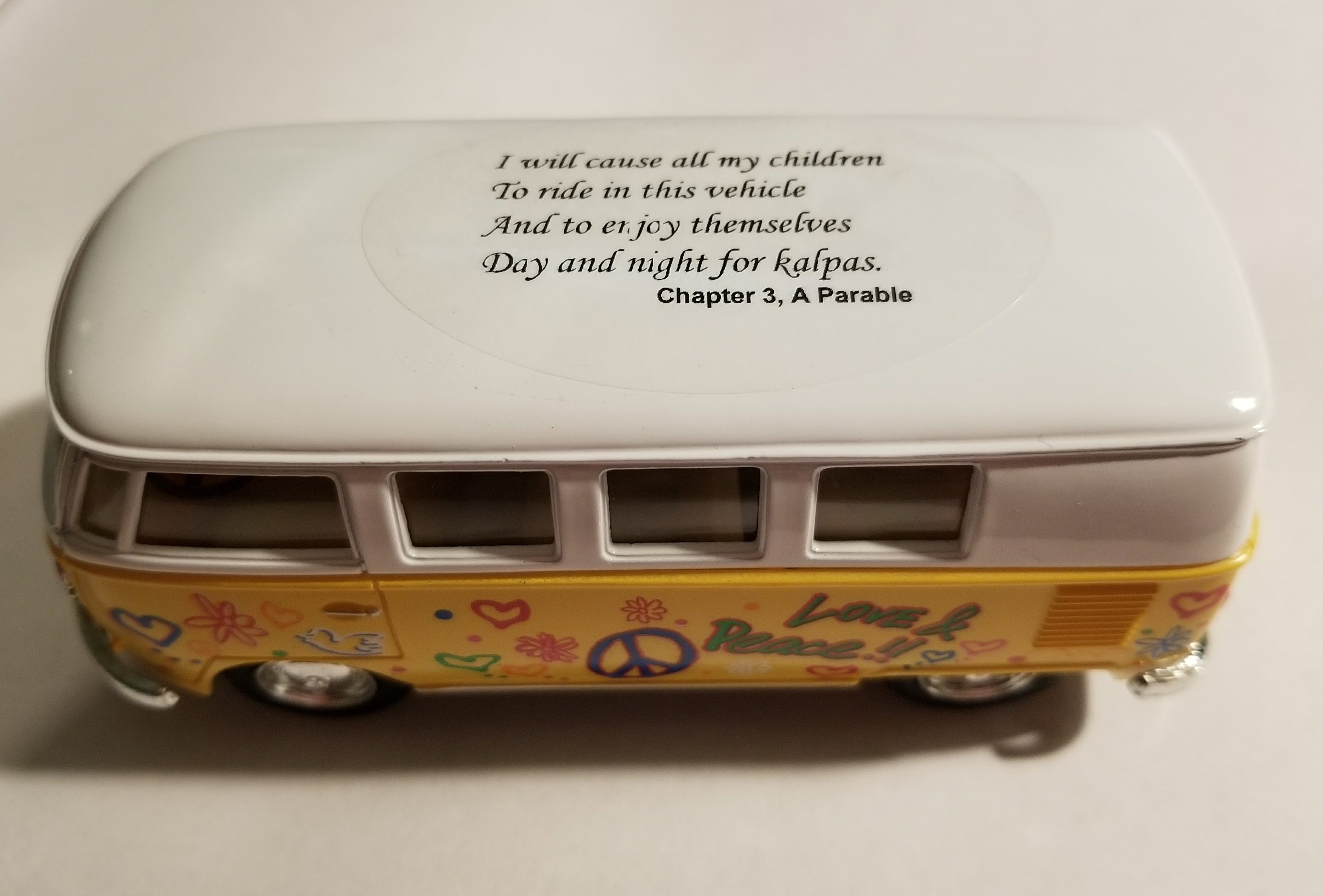
I will cause all my children
To ride in this vehicle
And to enjoy themselves
Day and night for kalpas.

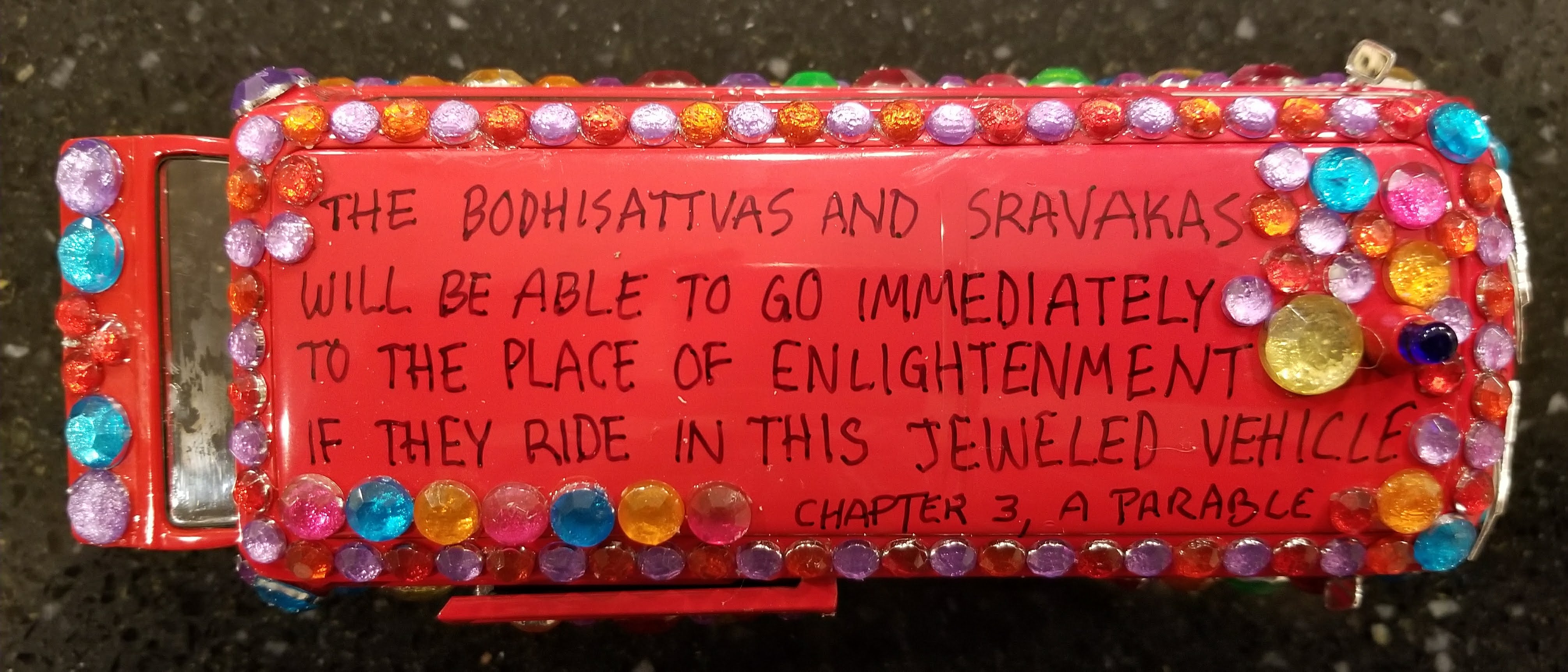
The Bodhisattvas and Śrāvakas
Will be able to go immediately
To the place of enlightenment
If they ride in this jeweled vehicle.

Therefore, even if you try to find another vehicle
Throughout the worlds of the ten quarters,
You will not be able to find any other one
Except those given by the Buddhas expediently.

I’ve always enjoyed this portion of Chapter 3, A Parable.

TheOneVehicle

Jeweled Vehicle

Day 6

Day 6 continues Chapter 3, A Parable

Having last month considered the limits of the Buddha as the father of all living beings, we consider Śākyamuni’s skillful expedients.

“In the same manner, I save all living beings from the burning house of the triple world, not by my powers or fearlessness, but with a skillful expedient. I expounded the teaching of the Three Vehicles: the Śrāvaka-Vehicle, Pratyekabuddha-Vehicle, and Buddha-Vehicle, as an expedient. I said, ‘Do not wish to live in the burning house of the triple world! Do not crave for inferior forms, sounds, smells, tastes or things tangible! If you cling to them and crave for them, you will be burned by them. Get out of the triple world quickly and obtain the teaching of the Three Vehicles: the Śrāvaka-Vehicle, Pratyekabuddha-Vehicle, and Buddha-Vehicle! I now assure you that you will never fail [to obtain those vehicles]. Exert yourselves, make efforts!’

“With this expedient, I caused them to advance. I said to them again, ‘Know this! This teaching of the Three Vehicles is extolled by the saints. This teaching saves you from any attachment or bond or desire. Ride in these Three Vehicles, eliminate āsravas, obtain the [five] faculties, the [five] powers, the [seven] ways to enlightenment, and the [eight right] ways, and practice dhyāna concentrations, emancipations, and samadhis so that you may be able to enjoy immeasurable peace and pleasure!’

This from the Introduction to the Lotus Sūtra:

From the theoretical standpoint, [The Parable of the Burning House] explains the relationship between the Three Vehicles and the One Vehicle. The three toy carts – the sheep-cart, deer-cart, and bullock-cart – respectively represent the Sravaka-Vehicle of the “hearers,” the Pratyekabuddha-Vehicle of the “private Buddhas,” and the Bodhisattva-Vehicle of those who serve and enlighten others. The large white bullock cart which is given to each of the children symbolizes the One Buddha Vehicle. The rich man first offered his children three kinds of carts as expedients, but in the end he gave each of them an identical large white bullock-cart. Obviously the Buddha told this parable to illustrate that the One Vehicle is true and the three are mere expedients. The differences between the One Vehicle and the Three Vehicles, which were discussed theoretically in Chapter Two, are now explained in a graphic story that anyone can understand and remember.

Introduction to the Lotus Sutra

Day 5

Day 5 begins Chapter 3, A Parable

Having last month listened as Śāriputra asks the Buddha to reassure “these twelve hundred people” of their future Buddhahood, we hear Śākyamuni’s reply to Śāriputra.

Thereupon the Buddha said to Śāriputra:
“Did I not tell you, ‘The Buddhas, the World-Honored Ones, expound the Dharma with expedients, that is, with various stories of previous lives, with various parables, with various similes, and with various discourses only for the purpose of causing all living beings to attain Anuttara-samyak-saṃbodhi’? All these teachings of the Buddhas are for the purpose of teaching Bodhisattvas. Śāriputra! Now I will explain this with a parable. Those who have wisdom will be able to understand the reason if they hear the following parable.

“Śāriputra! Suppose there lived a very rich man in a certain country, in a certain village, in a certain town. He was old. His wealth was immeasurable. He had many paddy fields, houses, and servants. His manor house was large, but had only one gate. In that house lived many people, numbering a hundred or two hundred or five hundred. The buildings were in decay, the fences and walls corrupt, the bases of the pillars rotten, and the beams and ridgepoles tilting and slanted.

“All of a sudden fires broke out at the same time from all sides of the house, and it began to burn. In this house lived children of the rich man, numbering ten or twenty or thirty. The rich man was very frightened at the great fires breaking out from the four sides of the house. He thought, ‘I am able to get out of the gate of the burning house safely, but my children are still inside. They are engrossed in playing. They do not know that the fires are coming towards them. They are not frightened or afraid. They are about to suffer, but do not mind. They do not wish to get out.’ Śāriputra! He also thought, ‘I am strong-muscled. I will put them in a flower-plate or on a table and bring them out.’

“But he thought again, ‘This house has only one gate. Worse still, the gate is narrow and small. My children are too young to know this. They are attached to the place where they are playing. They may fall [out of the plate or table] and get burned. I had better tell them of the danger. This house is already burning. They must come out quickly so as not to be burned to death.’

“Having thought this, he said to his children as he had thought, ‘Come out quickly!’ He warned them with these good words out of his compassion towards them, but they were too much engrossed in playing to hear the words of their father. They were not frightened or afraid. They did not wish to come out. They did not know what a fire was, what a house was, and what they would lose. They ran about happily. They only glanced at their father occasionally.

The Daily Dharma from Aug. 1, 2018, offers this:

Having thought this, he said to his children as he had thought, ‘Come out quickly!’ He warned them with these good words out of his compassion towards them, but they were too much engrossed in playing to hear the words of their father. They were not frightened or afraid. They did not wish to come out. They did not know what a fire was, what a house was, and what they would lose. They ran about happily. They only glanced at their father occasionally.

This passage is part of the Parable of the Burning House, told by the Buddha in Chapter Three of the Lotus Sūtra. In this story, he compares us living in this world of conflict to children playing in a dangerous house. As the children in the story were too distracted by their games to hear their father’s warnings, we are often too distracted by the attachments of our world to hear the voice of the Buddha.

The Daily Dharma is produced by the Lexington Nichiren Buddhist Community. To subscribe to the daily emails, visit zenzaizenzai.com
Day 4

Day 4 finishes Chapter 2, Expedients, and completes the first volume of the Sūtra of the Lotus flower of the Wonderful Dharma.

Having last month considered those who have already attained the enlightenment of the Buddha, we learn that the countless Buddhas in the future will employ expedients.

The World-Honored Ones in the future
Will be countless in number.
Those Tathāgatas also
Will expound the Dharma with expedients.

The Tathāgatas save all living beings
With innumerable expedients.
They cause all living beings to enter the Way
To the wisdom-without-āsravas of the Buddha.
Anyone who hears the Dharma
Will not fail to become a Buddha.

Every Buddha vows at the outset:
“I will cause all living beings
To attain the same enlightenment
That I attained.”

The future Buddhas will expound many thousands
Of myriads of millions of teachings
For just one purpose,
That is, for the purpose of revealing the One Vehicle.

The Introduction of the Lotus Sutra offers this:

Toward the end of this chapter, the Buddha expounds a well-known teaching called, “A small good deed leads a person to become a Buddha.” This teaching states that whenever someone shows sincere faith in the Buddha by performing a good deed, no matter how tiny it may be, this act sets him on the path to Buddhahood, and he or she is sure to become a Buddha eventually. Even though such a person is not yet a Buddha, he or she is on the way, and deserves respect as a future Buddha.

For example, even a person who has never performed any special practice can become a Buddha simply by making an offering, such as incense, flowers, or the wonderful sounds of music, in front of a Stupa (a round dome-shaped shrine) or an image of the Buddha. The sutra repeatedly maintains that such people “have already attained the enlightenment of the Buddha.” Furthermore, just entering a shrine only once and reciting, “Namo Buddhaya” (Homage to the Buddha!), or offering a single flower, is enough to enable anyone to become a Buddha. What is more, even a child at play, who pretends to build a Stupa by heaping up a pile of sand or dirt, “has already become a Buddha.” In the same way, if a child draws a picture of the Buddha on a wall with a stick or the back of his fingernail, and makes a gesture of praying to it, he or she has already become a Buddha (or, as the sutra says again, “has already attained the enlightenment of the Buddha”), (The Buddha is pure good: any act of good on our part, no matter how small or insignificant it may appear to be, puts us in his embrace from which nothing can ever separate us.)

The sutra presents various instances, one by one in order, to show that any small act of good will on our part enables us to become a Buddha. From these concrete examples, we can see that the One Vehicle is the teaching of the Buddha himself—boundless in bounty, pouring forth perfect life in limitless supply, lending a hand to everyone, and leading all of us to his own enlightenment. Finally, the sutra adds, “Anyone who even hears the Dharma (law/truth) will not fail to become a Buddha!”

Introduction to the Lotus Sutra

Day 3

Day 3 covers the first half of Chapter 2, Expedients.

Having last month witnessed the clearing of twigs and leaves from the congregation, we hear Śākyamuni explain the one great purpose for which the Buddhas appear in the worlds.”

The Buddha said to him:

“The Buddhas, the Tathāgatas, expound this Wonderful Dharma as rarely as the udumbara-flower blooms. Śāriputra! Believe what T am going to say! My words are not false.

“Śāriputra! The purpose of the various teachings that the Buddhas expound according to the capacities of all living beings is difficult to understand. I also expound various teachings with innumerable expedients, that is to say, with stories of previous lives, parables, similes and discourses. [The purpose of the various teachings of the Buddhas is difficult to understand] because the Dharma cannot be understood by reasoning. Only the Buddhas know the Dharma because the Buddhas, the World-Honored Ones, appear in the worlds only for one great purpose.

“Śāriputra! What is the one great purpose for which the Buddhas, the World-Honored Ones, appear in the worlds? The Buddhas, the World-Honored Ones, appear in the worlds in order to cause all living beings to open [the gate to] the insight of the Buddha, and to cause them to purify themselves. They appear in the worlds in order to show the insight of the Buddha to all living beings. They appear in the worlds in order to cause all living beings to obtain the insight of the Buddha. They appear in the worlds in order to cause all living beings to enter the Way to the insight of the Buddha. Śāriputra! This is the one great purpose for which the Buddhas appear in the worlds.”

Why study Buddhism? Why read the Lotus Sūtra? “To obtain the insight of the Buddha.” Not being reborn in some distant paradise. Not escape suffering. “This is the one great purpose for which the Buddhas appear in the worlds.”