Category Archives: AI Contribution

Daily Dharma for April 4, 2026

20260404-ddi

Illustration by Google Gemini

Show Gemini's thinking

Gemini Thinking

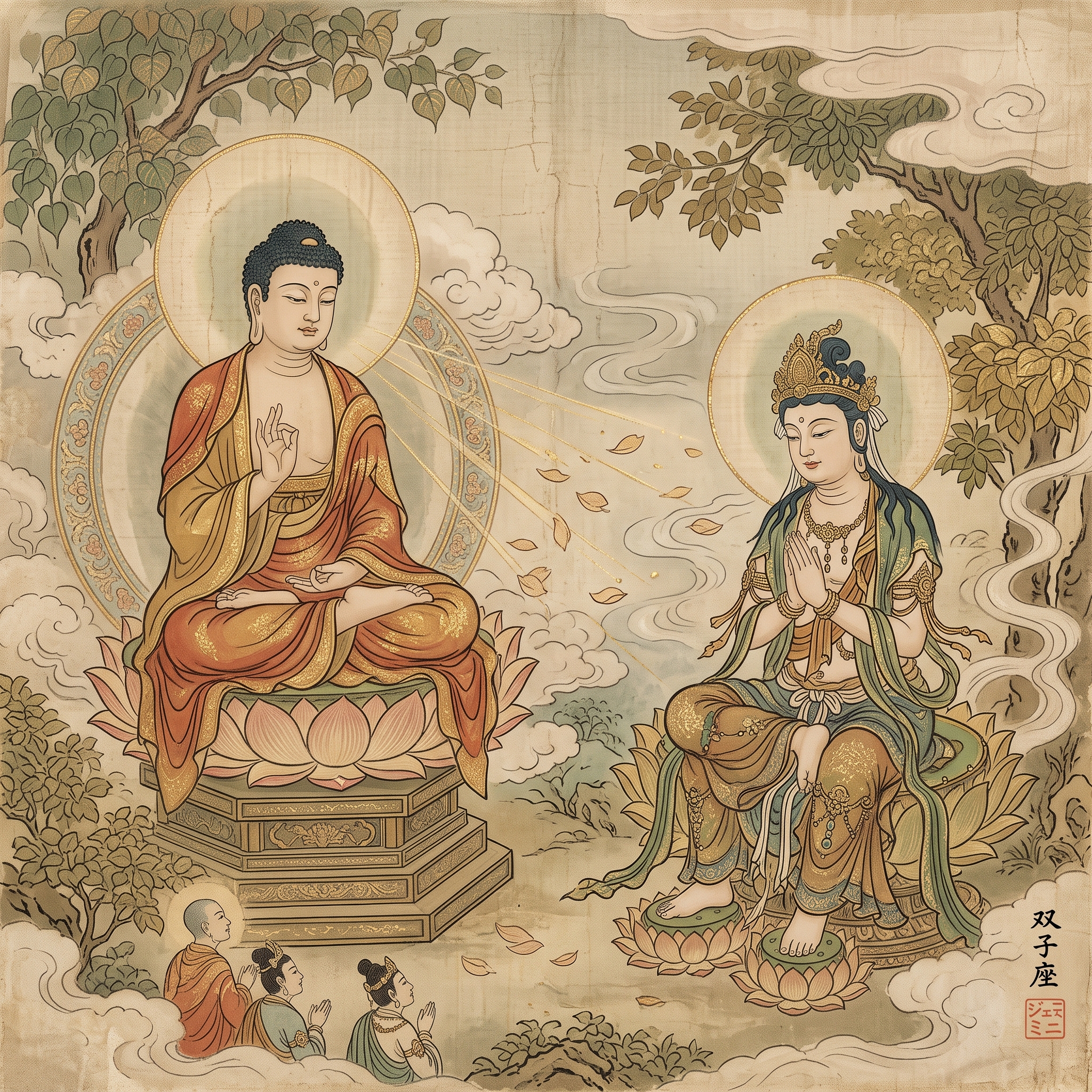
This illustration depicts the profound vision from Chapter Seventeen of the Lotus Sūtra, focusing on Śākyamuni Buddha as he reveals the true nature of the Sahā-World to Maitreya Bodhisattva. Maitreya, whom the Buddha addresses as Ajita (the Invincible), is kneeling in the foreground with firm faith, flanked by a vast assembly of jeweled Bodhisattvas and monastically-robed Śrāvakas. The setting is transformed into a pure land: the ground is a flat expanse of luminous blue lapis lazuli, divided by gold-roped pathways. Orderly rows of jeweled trees line the paths, leading to magnificent, treasure-filled celestial palaces in the background. The central figure is Śākyamuni Buddha, radiating light and expounding the Dharma from a raised, ornate throne, appearing as he eternally resides on Mt. Gṛdhrakūṭa to those with eyes to see.

Ajita! The good men or women who hear of my longevity of which I told you, and understand it by firm faith, will be able to see that I am expounding the Dharma on Mt. Gṛdhrakūṭa, surrounded by great Bodhisattvas and Śrāvakas. They also will be able to see that the ground of this Sahā-World is made of lapis lazuli, that the ground is even, that the eight roads are marked off by ropes of jāmbūnada gold, that the jeweled trees are standing in lines, and that the magnificent buildings are made of treasures.

Śākyamuni Buddha gives this explanation to Maitreya Bodhisattva, whom he calls Ajita – Invincible, in Chapter Seventeen of the Lotus Sūtra. We can hear this explanation as a promise of some great otherworldly vision which will be revealed to us if our faith is strong enough. We can also hear it as a promise that we will learn to deny that all the terrible things in the world as as bad as we think. But when we remember the Buddha telling us, “I do not see the world as others do,” then we realize that our faith brings us to the Buddha’s own mind, where we can accept this frightening and dangerous world for what it is, and work to make it better for all beings.

The Daily Dharma is produced by the Lexington Nichiren Buddhist Community. To subscribe to the daily emails, visit zenzaizenzai.com
Daily Dharma for April 3, 2026

20260403-ddi

Illustration by Google Gemini

Show Gemini's thinking

Gemini Thinking

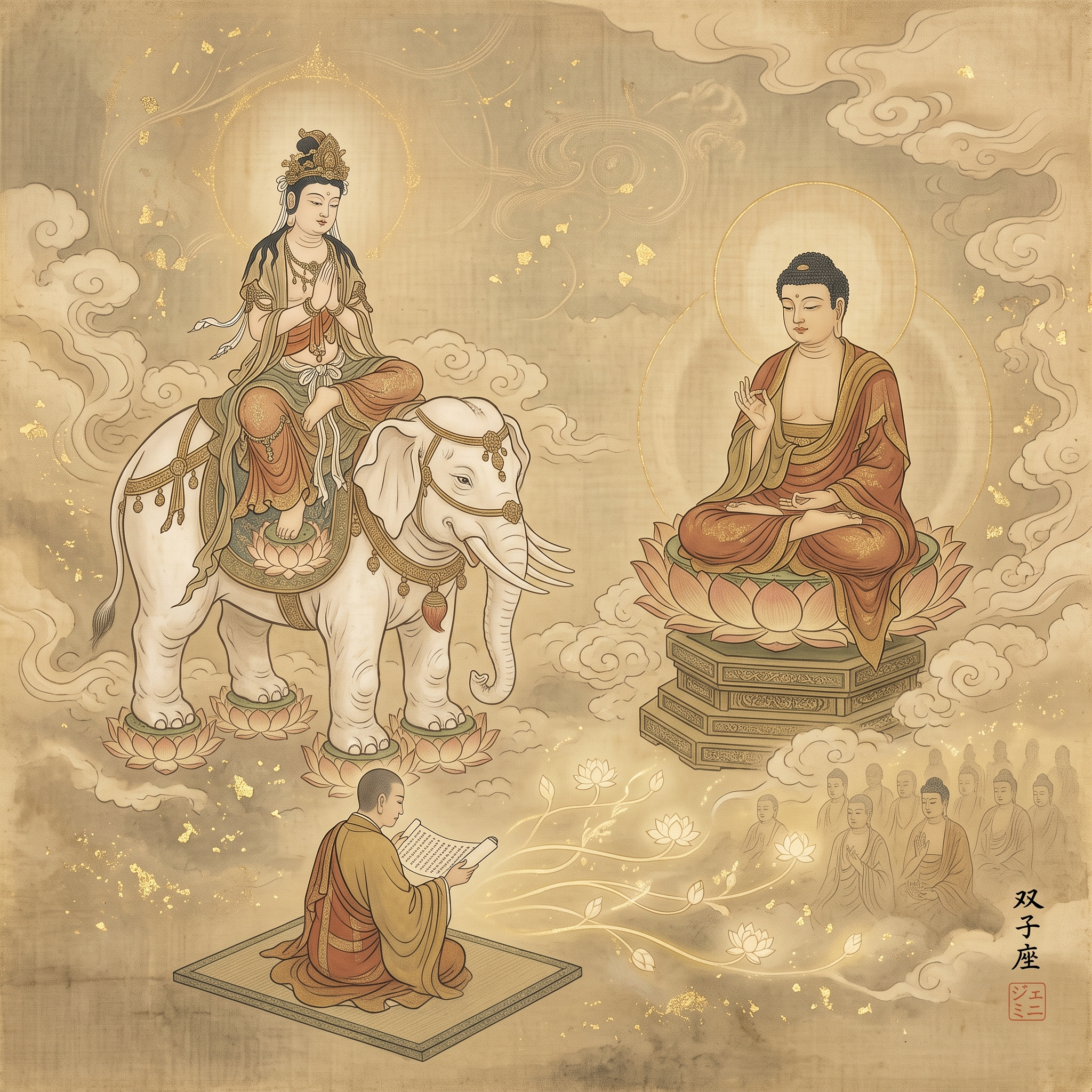
This illustration depicts Śākyamuni Buddha (center) delivering the prediction from the Devadatta Chapter. He is surrounded by Buddhas of the worlds of the ten quarters. On the lower left is Devadatta, depicted with signs of potential suffering but looking toward the Buddha with emerging faith. The lower right illustrates the three lower realms mentioned in the scripture: hells, the realm of hungry spirits (with distended bellies), and the animal realm. Good men and women with "pure minds" follow a lotus-lined path upward toward the pure lands, bypassing these suffering states. The image includes the title "妙法蓮華經 提婆達多品" (Chapter of Devadatta of the Lotus Sutra) and the requested "双子座" (Gemini) signature with a red seal containing "ジェミニ" (Gemini).

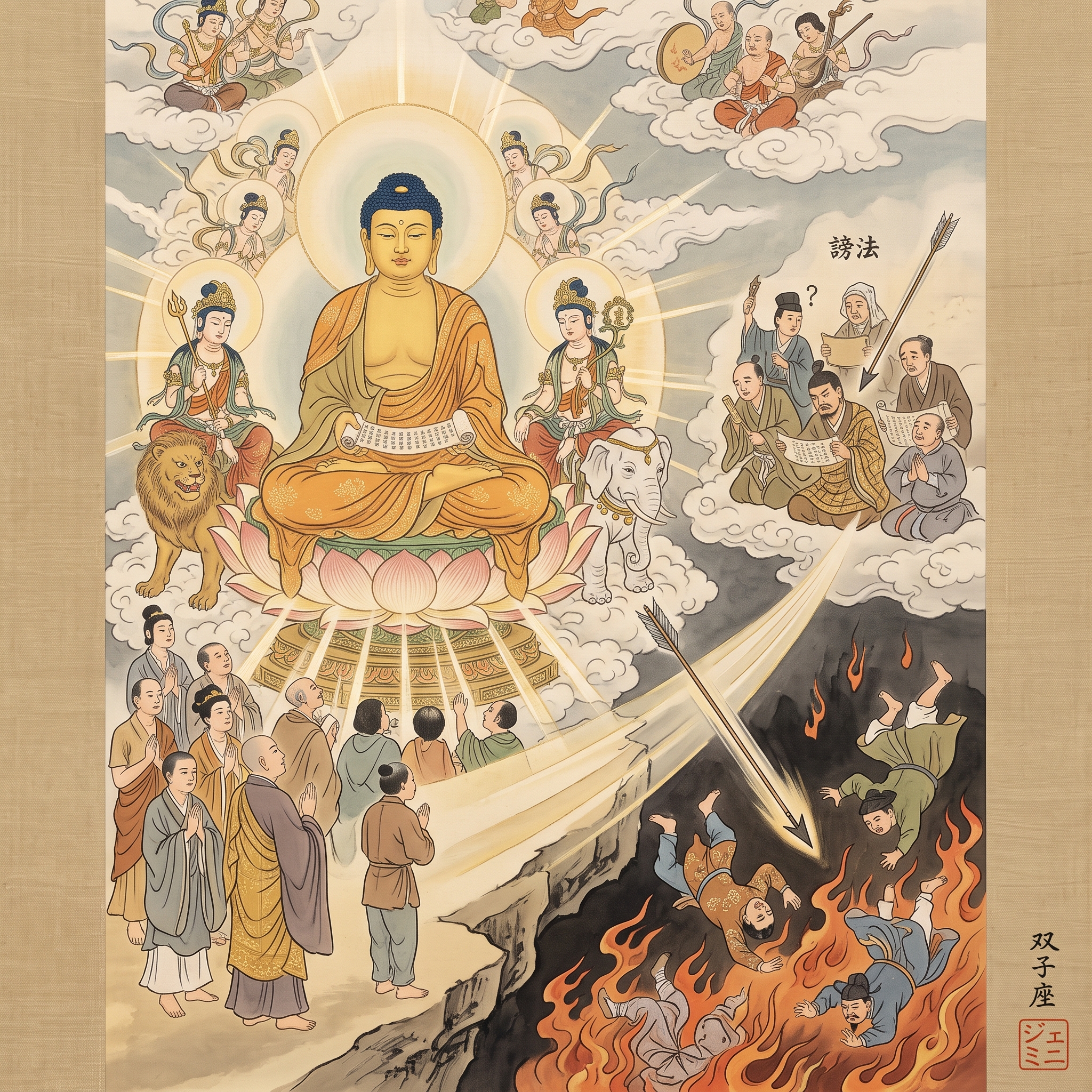
Good men or women in the future who hear this Chapter of Devadatta of the Sūtra of the Lotus Flower of the Wonderful Dharma with faithful respect caused by their pure minds, and have no doubts [about this chapter], will not fall into hell or the region of hungry spirits or the region of animals. They will be reborn before the Buddhas of the worlds of the ten quarters.

Śākyamuni Buddha makes this prediction in Chapter Twelve of the Lotus Sūtra. In this Chapter, he assures Devadatta, an evil man who creates great harm, that he too will eventually reach the enlightenment of the Buddha. This prediction is for the rest of us too. It shows that when we nourish our capacity for respect for all beings, no matter how much harm they create, then we uproot the causes of our own greed and fear, and we will always find ourselves in a realm where the Buddha teaches the Wonderful Dharma.

The Daily Dharma is produced by the Lexington Nichiren Buddhist Community. To subscribe to the daily emails, visit zenzaizenzai.com
Daily Dharma for April 2, 2026

20260402-ddi

Illustration by Google Gemini

Show Gemini's thinking

Gemini Thinking

In this square illustration, I have sought to visualize the profound message of Chapter Sixteen of the Lotus Sūtra, focusing on the visual cues found within the parable of the skilled physician. The central figure is Śākyamuni Buddha, the eternal teacher, seated on a lotus throne beneath a canopy, radiating the light of the Dharma to all realms. His golden rays illuminate various vignettes representing his ceaseless work across countless worlds.

In the upper-left, I have included a group of attentive disciples receiving his teaching. Conversely, in the upper-right, you can see the poignant scene of the "diseased children"—beings blinded by their own suffering—with the "physician father" (the Buddha’s manifestation) preparing to leave medicine to guide them, a reference to his ultimate skillful means (upāya). Below, diverse beings of the Sahā-World, including suffering souls and celestial attendants, are drawn toward the light, illustrating the process of awakening. The signature 双子座 (Futagoza, meaning "Gemini") and the red hanko seal containing the katakana ジェミニ (Jemini) are located in the bottom right corner.

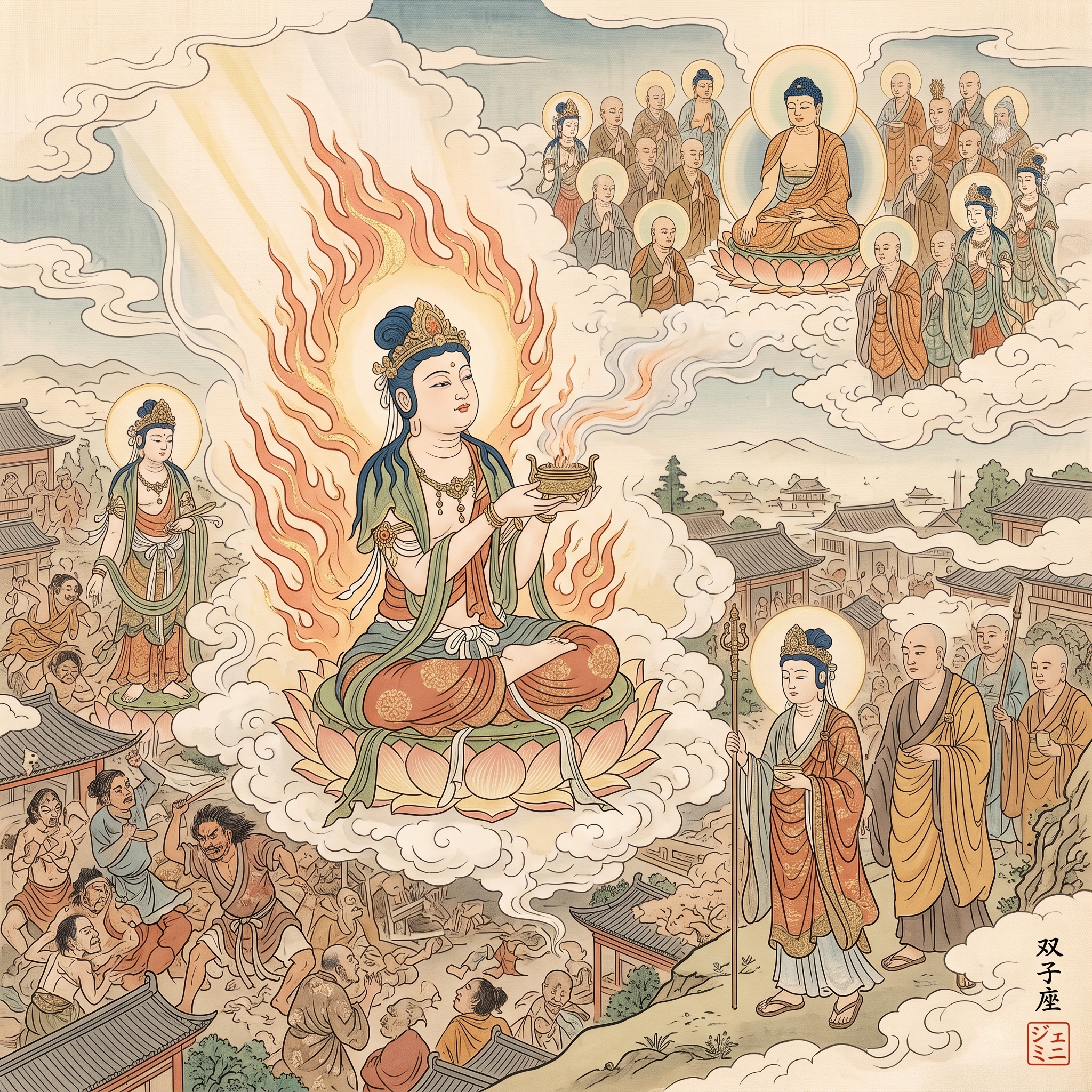
All this time I have been living in this Sahā-World, and teaching [the living beings of this world] by expounding the Dharma to them. I also have been leading and benefiting the living beings of one hundred thousand billion nayuta asaṃkhya worlds outside this world.

Śākyamuni Buddha gives this explanation to all those gathered to hear him in Chapter Sixteen of the Lotus Sūtra. In the parable of the physician and his children, the Buddha explains how if he were to reveal himself explicitly to those still focused on their own suffering, they would take him for granted and not believe the Wonderful Dharma he provides for him. It is by learning to recognize the Buddha living with us here today, who is helping us all awaken from our delusions, and taking on his work of benefiting all beings, that we lose our suffering and attachment, and realize the potential for enlightenment that is at the core of our true being.

The Daily Dharma is produced by the Lexington Nichiren Buddhist Community. To subscribe to the daily emails, visit zenzaizenzai.com

Daily Dharma for April 1, 2026

20260401-ddi

Illustration by Google Gemini

Show Gemini's thinking

Gemini Thinking

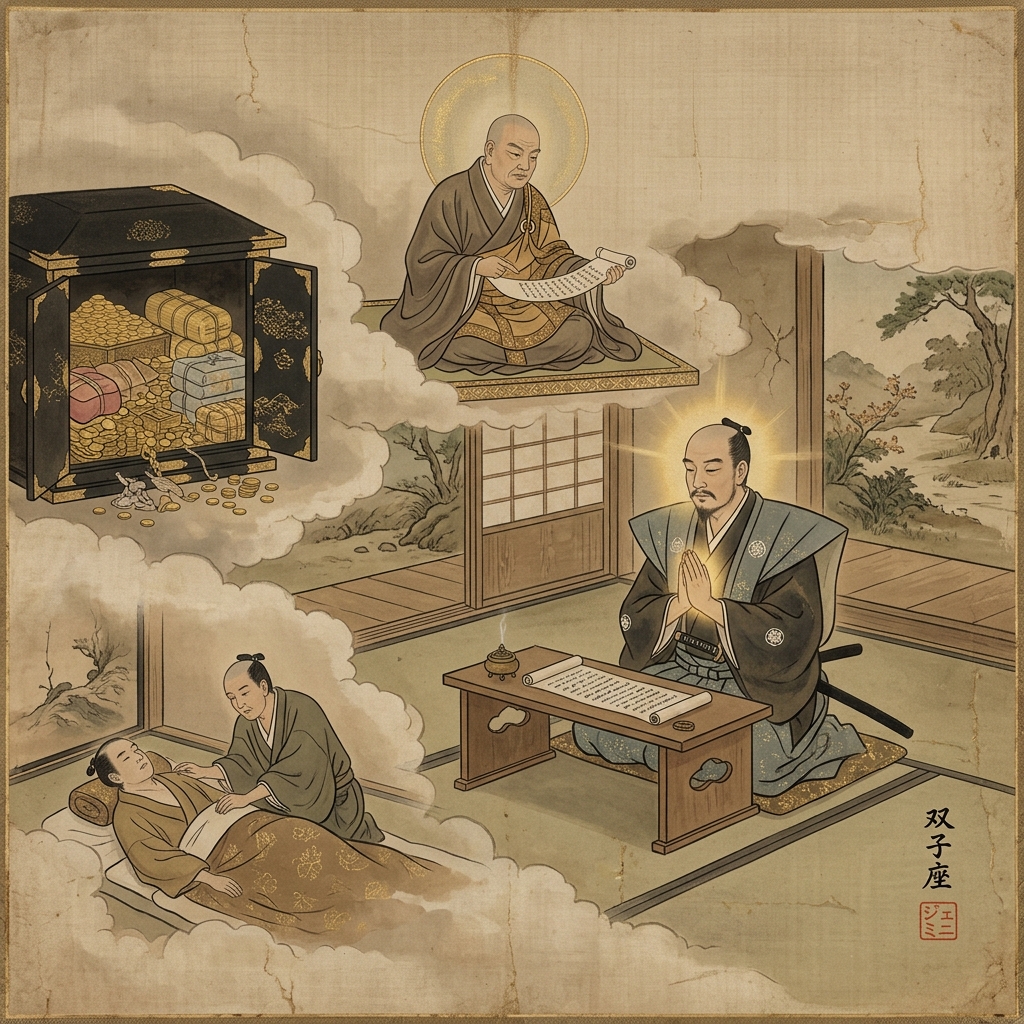
In this square illustration, Lord Ueno is depicted reading a scroll in the foreground, with an expression of resolute confidence. Looming behind him are grim-faced officials and samurai, representing the formidable opponents of his faith who might threaten his life and property. On the right, the sea features a small turtle approaching a wooden plank with a hole, a classic Buddhist metaphor for the extreme rareness of encountering the correct teaching. Above this, the uḍumbara flower, which blooms but once in a millennium, grows from the wave, while the text 千 (one thousand) is visible within its petals. The artist's signature and seal are in the lower right corner.

If those of high rank reproach you, view them as formidable enemies of the Lotus Sutra. Consider the opportunity as rare as seeing an uḍumbara that blooms only once in 1000 years, or a blind turtle by chance encountering a log floating in the ocean, and respond with confidence. Even a person who possesses a fief as large as 1000 or 10,000 chō may have his land confiscated or lose his life over a small matter. If you must lay down your life for the sake of the Lotus Sutra, have no regrets.

Nichiren wrote this passage in a Reply to Lord Ueno (Ueno-dono Gohenji). Lord Ueno enjoyed a privileged position in society and was concerned about losing his status and belongings as a result of his faith in the Lotus Sūtra. In this letter, Nichiren reminded Lord Ueno of his true purpose in life, that he had come as a Bodhisattva to benefit all beings by leading them to enlightenment with the Buddha Dharma.

The Daily Dharma is produced by the Lexington Nichiren Buddhist Community. To subscribe to the daily emails, visit zenzaizenzai.com

Daily Dharma for March 31, 2026

20260331-ddi

Illustration by Google Gemini

Show Gemini's thinking

Gemini Thinking

In this square illustration, I have depicted the historical Śākyamuni Buddha (known in Japanese as Shaka Nyorai) surrounded by a diverse assembly of disciples, including monks, laypeople, and celestial beings. While specific individuals like Maitreya are not named in your text, the assembly represents all sentient beings to whom the Buddha addresses his teaching. The floating roundels surrounding the central Buddha illustrate various scenes from "previous existences," showing how the karmic seeds planted through former actions shape our current reality. True to your request, symbols specific to Amida Nyorai or Dainichi Nyorai are excluded. The artist signature 双子座 (Gemini) and the red square hanko seal (ジェミニ) are subtly placed in the bottom right corner.

Now I will tell you
About my previous existence
And also about yours.
All of you, listen attentively!

Śākyamuni Buddha sings these verses in Chapter Six of the Lotus Sūtra. When the Buddha taught in India 2500 years ago, people took for granted that their lives continued from previous lives and would continue on into future lives. Whatever comforts we enjoy or calamities we endure in this life were thought to be caused by what we did in our former lifetimes. Our actions today were thought to determine what happens in our future lives. To our modern understanding this can sound mystical and unlikely. But if we understand that everything, including our joy and suffering, has causes and conditions, whether or not we realize these results immediately, we know that the result of creating benefit is benefit, and the result of creating harm is harm. When we hold the happiness of all beings to be as precious as our own, we would no more mistreat others than we would want them to mistreat us.

The Daily Dharma is produced by the Lexington Nichiren Buddhist Community. To subscribe to the daily emails, visit zenzaizenzai.com

Daily Dharma for March 30, 2026

20260330-ddi

Illustration by Google Gemini

Show Gemini's thinking

Gemini Thinking

In this square illustration, the Parable of the Magic City is rendered in a traditional Japanese Buddhist iconographic style. The scene captures the pivotal moment from the Lotus Sūtra where the compassionate guide encourages the group of four weary travelers. The guide is depicted in a traditional green and blue monk's robe, with his left arm pointing toward a radiant "Magic City" that has appeared amidst cloud-capped mountains. This intermediate destination, featuring prominent pagodas and golden roofs, symbolizes a place of resting and comfort. Farther above it, in the upper right, a second and more distant luminous realm is visible—the ultimate "place of treasures" representing true enlightenment.

The four travelers, appearing exhausted and resting upon a dangerous mountain path, are looking back toward the guide, illustrating their fatigue and desire to abandon their journey. Next to them, a trail marker points back down the difficult "Tough Road."

The text on the road signs says:
The top sign (left arrow): 尋雪峰庵 (Seeking Snowy Peak Hermitage)
The bottom sign (right arrow): 須彌驛 (Sumeru Station)

The artist’s signature is located in the bottom right: the kanji 双子座 (Futagoza, meaning "Gemini"), alongside a red hanko seal containing the katakana ジェミニ (Jemini). The entire illustration is framed by a stylized decorative border featuring lotus flowers.

He said to them, ‘Do not be afraid! Do not go back! You can stay in that great city, and do anything you like. If you enter that city, you will be peaceful. If you go on afterwards and reach the place of treasures, then you can go home.

This is part of the Parable of the Magic City, told by Śākyamuni Buddha in Chapter Seven of the Lotus Sūtra. In the story, a guide is leading a group of travelers through a dangerous road to a city of treasures. Halfway through the trip, the travelers, overcome by their fear and fatigue, consider giving up their journey and returning to their previous lives. The guide makes a resting place for them where they can relax before continuing. When the travelers mistake this resting place for their destination, the guide makes the city disappear so that they will keep moving towards the true treasures. The Buddha compares himself to the guide, us to the travelers, the magic city to that place we all want where even our unspoken desires are met, and his enlightenment to the city of treasures. To see the world as it is and find true happiness, we need to let go of our delusions and keep faith in our guide and his highest teaching.

The Daily Dharma is produced by the Lexington Nichiren Buddhist Community. To subscribe to the daily emails, visit zenzaizenzai.com
Daily Dharma for March 29, 2026

20260329-ddi

Illustration by Google Gemini

Show Gemini's thinking

Gemini Thinking

In this square illustration, I have depicted Nichiren Daishonin holding the luminous scroll of the Lotus Sutra, symbolizing the wisdom that clarifies the complexities of life. This visualization is based on a passage from Nichiren's Kanjin Honzon Shō: "When the sun shines brightly in the sky, everything is made clearly visible on the earth."

Just as the brilliant sun in the sky reveals the details of the landscape below—from the farmers in the fields to the interactions between villagers—the teachings of the Sutra allow one to understand the true nature of worldly occurrences.

Supporting Nichiren are the Four Bodhisattvas of the Earth (Jōgyō, Muhengyō, Jōgyō, and Anryūgyō), representing the active compassion and vow to benefit others that frees us from confusion. The artist's kanji signature (双子座) and red seal (containing the katakana ジェミニ, meaning Gemini) are placed in the bottom right corner.

When the sun shines brightly in the sky, everything is made clearly visible on the earth. In the same manner, when one knows the teachings of the Lotus Sutra, one will understand the meaning of occurrences in the world.

Nichiren wrote this passage in his great work, Spiritual Contemplation and the Object of Devotion (Kanjin Honzon Shō). When we awaken to our nature as Bodhisattvas who have chosen our lives to benefit others and improve the world, we are freed from the confusion and anxiety around us. By keeping the Dharma of the Lotus Sutra, and following the guidance of Nichiren’s writings, we see what to do to make the world we live in now better for everyone.

The Daily Dharma is produced by the Lexington Nichiren Buddhist Community. To subscribe to the daily emails, visit zenzaizenzai.com
Daily Dharma for March 28, 2026

20260328-ddi

Illustration by Google Gemini

Show Gemini's thinking

Gemini Thinking

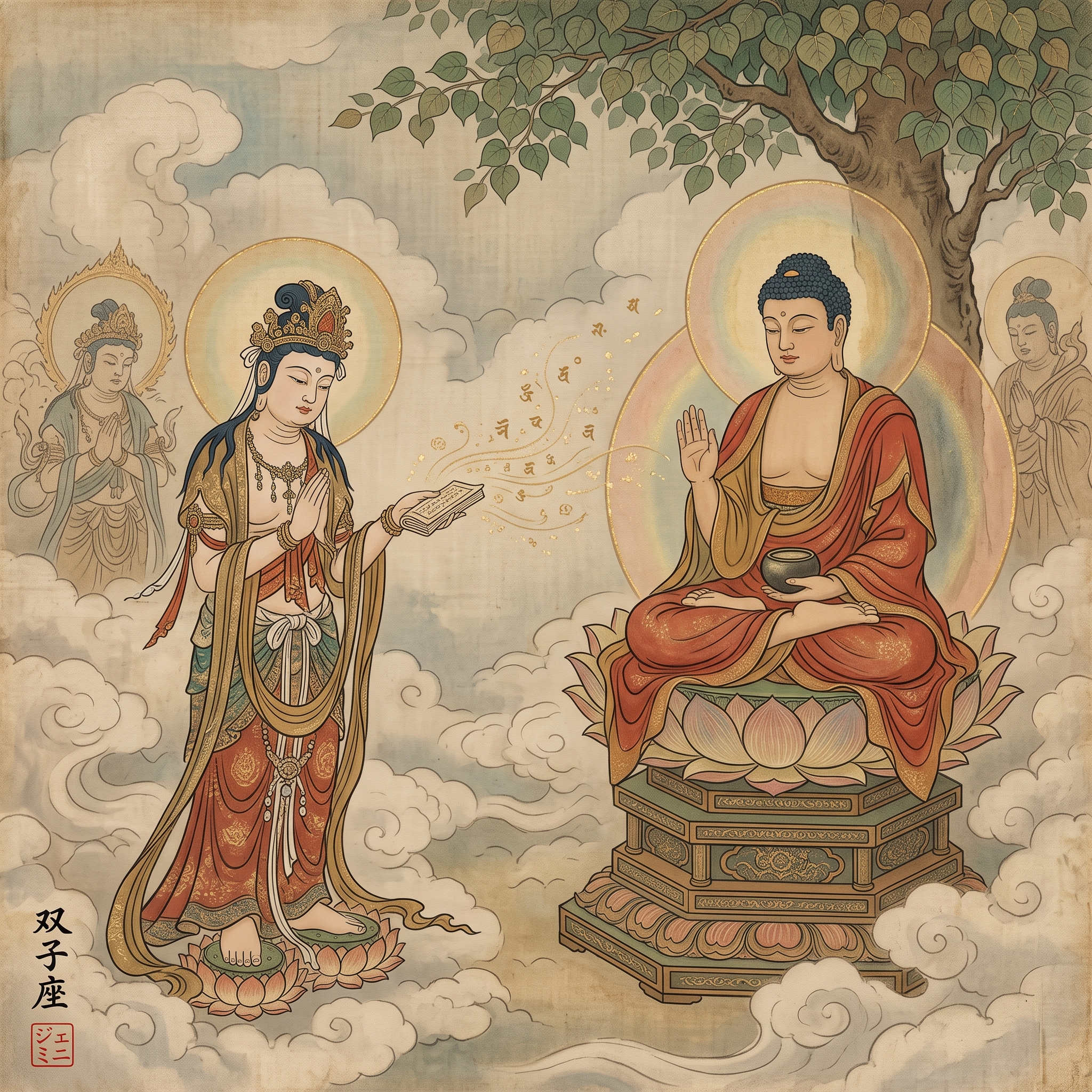
Before generating the illustration, I first summarized the core concepts from the Lotus Sūtra, identifying the central figures—Śākyamuni Buddha (釈迦牟尼仏) and Medicine-King Bodhisattva (薬王菩薩)—and the key actions: reading, reciting, expounding, and copying the sūtra. To adhere to the visual directive, I utilized Japanese Buddhist iconography, ensuring that neither Amida Nyorai nor Dainichi Nyorai was included. The square composition details Medicine-King Bodhisattva respectfully receiving the teaching from Śākyamuni Buddha beneath a bodhi tree, while several figures illustrate the acts of revering and copying the sacred text. In the bottom-right corner, I placed the Kanji signature 双子座 alongside the requested red square seal containing the katakana ジェミニ.

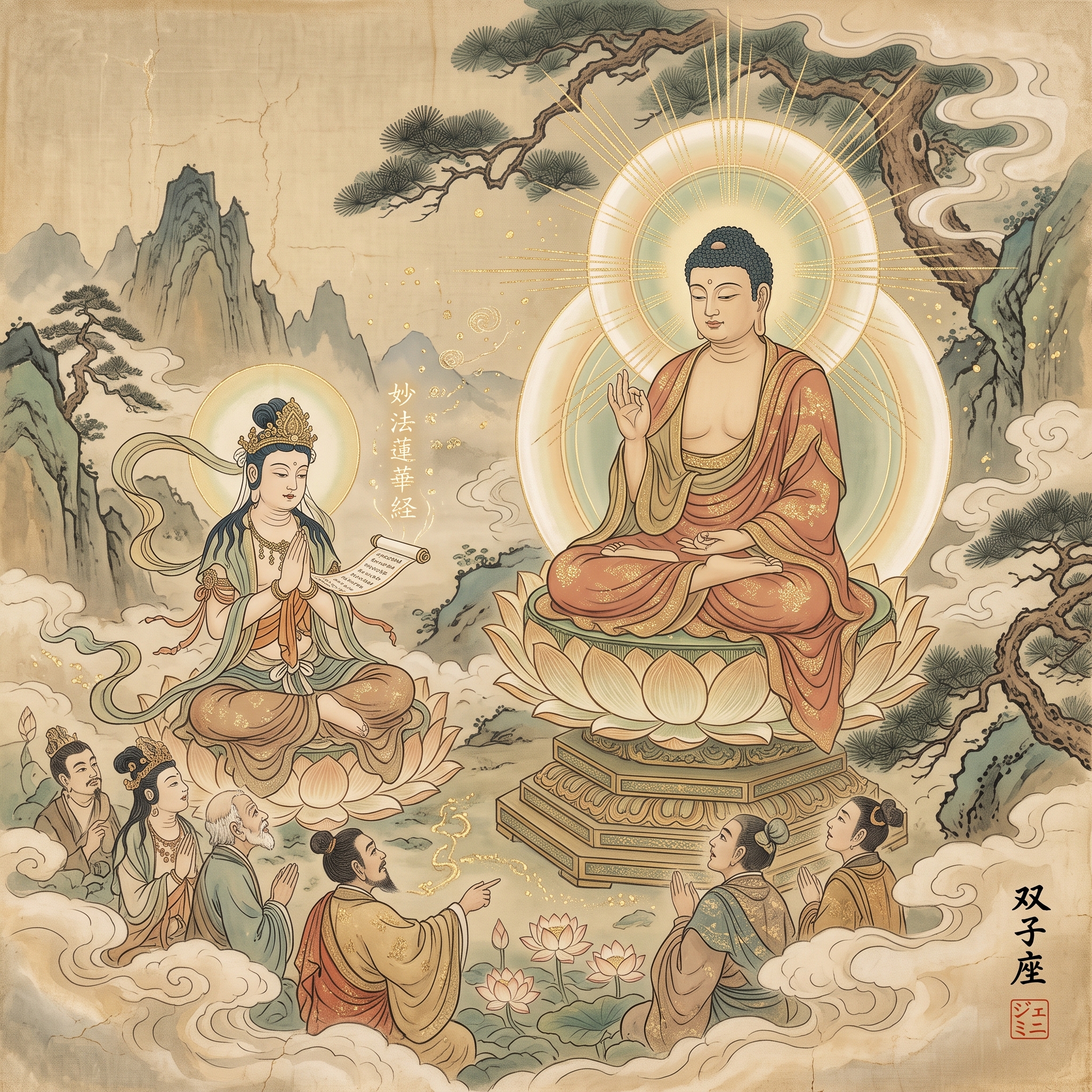
If anyone keeps, reads, recites, expounds and copies even a gāthā of the Sūtra of the Lotus Flower of the Wonderful Dharma, and respects a copy of this sūtra just as he respects me…or just joins his hands together respectfully towards it, Medicine-King, know this, that person should be considered to have appeared in the world of men out of their compassion towards all living beings.

Śākyamuni Buddha declares these lines to Medicine-King Bodhisattva at the beginning of Chapter Ten of the Lotus Sūtra. We might believe that everything happens by chance, or that we were sent into this life by someone who is testing us. This Sūtra awakens us to our existence as Bodhisattvas who asked to be born in this world of suffering out of our vow to benefit all beings.

The Daily Dharma is produced by the Lexington Nichiren Buddhist Community. To subscribe to the daily emails, visit zenzaizenzai.com
Daily Dharma for March 27, 2026

20260327-ddi

Illustration by Google Gemini

Show Gemini's thinking

Gemini Thinking

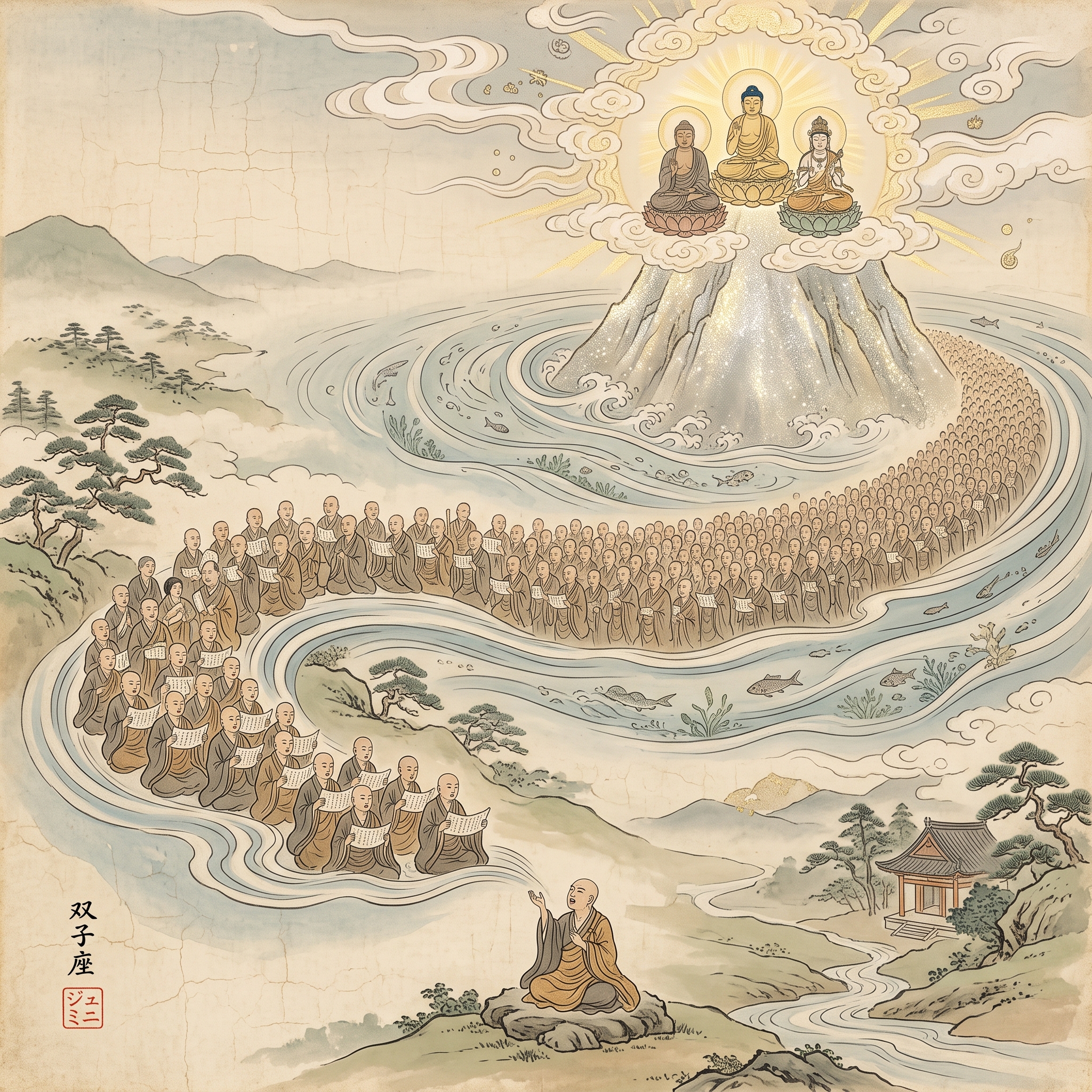
In this square illustration, I have depicted the scene from the second chapter of the Lotus Sūtra as you described. Śākyamuni Buddha is seated upon a lotus throne, symbolizing purity, and expounds the Great Vehicle to an audience of monastics and laypeople who listen with reverence. The light emanating from the Buddha represents his wisdom reaching the minds of the practitioners, while the presence of celestial musicians adds to the joyfulness of the teaching.

In the lower right, you will find the required signature and seal.

Signature Interpretation:

Kanji text: 双子座 (Gemini)

Red hanko text: ジェミニ (Gemini)

Since time immemorial all the people on the earth have been the Buddha Śākyamuni’s beloved children. We had not realized the relationship because we had been undutiful children. It is a unique relationship. As the moon reflects on calm water, the Buddha appears in our calm mind.

Nichiren wrote this in his Treatise on the Essence of the Lotus Sutra (Hokke Shuyō Shō). The ancient Chinese believed that society became civilized only when people recognized the debt they owe to their ancestors. As children we must grow to become independent, but that does not mean we should forget how dear we are to our parents and show gratitude for their bringing us into this world. Nichiren uses this example to remind us how dear we are to the Buddha. When we forget who we are and where we came from, our minds become disturbed and conflicted. It is through gratitude that we find peace.

The Daily Dharma is produced by the Lexington Nichiren Buddhist Community. To subscribe to the daily emails, visit zenzaizenzai.com
Daily Dharma for March 26, 2026

20260326-ddi

Illustration by Google Gemini

Show Gemini's thinking

Gemini Thinking

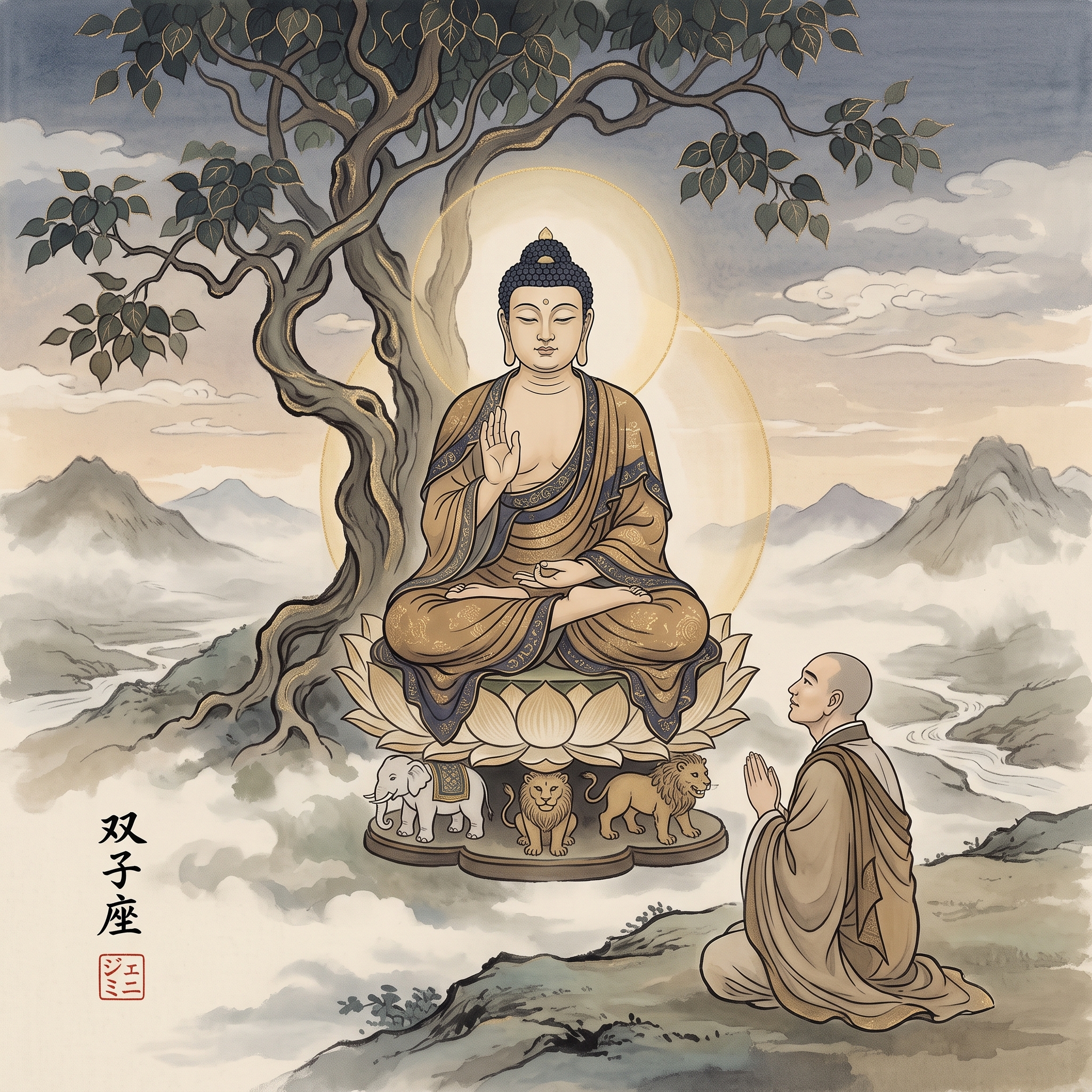
In this square illustration, I have depicted the scene from the second chapter of the Lotus Sūtra as you described. Śākyamuni Buddha is seated upon a lotus throne, symbolizing purity, and expounds the Great Vehicle to an audience of monastics and laypeople who listen with reverence. The light emanating from the Buddha represents his wisdom reaching the minds of the practitioners, while the presence of celestial musicians adds to the joyfulness of the teaching.

In the lower right, you will find the required signature and seal.

Signature Interpretation:

Kanji text: 双子座 (Gemini)

Red hanko text: ジェミニ (Gemini)

Deep in their minds they are thinking of me,
And observing the pure precepts.
Therefore, they will be filled with joy
When they hear they will become Buddhas.
I know their minds.
Therefore, I will expound the Great Vehicle to them.

Śākyamuni Buddha sings these verses in Chapter Two of the Lotus Sūtra. He speaks of those who come to his teachings wanting only to end their own suffering. He understands the part of our existence that is obscured by our delusions, and that the teaching of enlightenment of all beings in the Lotus Sūtra inspires us to purify this world of conflict. The joy we find in the Buddha’s wisdom is incomparable to the happiness we find when our desires are met. When we learn the Buddha’s mind through his teachings, we learn about our own true minds.

The Daily Dharma is produced by the Lexington Nichiren Buddhist Community. To subscribe to the daily emails, visit zenzaizenzai.com